
Photo by: raptorresource.org
~~ a Haibun ~~
~~ by tkbrown
She flits away, then returns;
She follow in dew course.
Blue jay plays with little dog.

windcityrescue.wordpress.com – September 2012
writer, author, poet, artist, reader
She flits away, then returns;
She follow in dew course.
Blue jay plays with little dog.
Stark contrast -- red, white;
Backdrop, black mottled with gray --
Red Fox, snow tree-line!

Thanksgiving comes 'round but once in a year;
families gather to engage in prayer
for all new blessings received with much care.

Food will be eaten, much has been spread
it seems everywhere except on the bed,
a colorful view -- yellow, green and red.

There is so much food, it is hard to choose --
a bit of this, a bit of that -- a ruse,
fanfare tries hard to not indulge abuse.

Family time for all, with love is cast
to the forefront instead of placing last --
so much sharing to recover the past.

It's hard to slip even a word edgewise,
and many a word we must now excise;
do not interrupt, it would not be wise.

Keep this and that under your wide-brimmed hat,
because saying it might create a spat --
one surely would not want the guild of that.

Memories are made for all to recall,
and pictures are posed to hang on the wall --
festivities grand are enjoyed by all.
~~~~~~~~~~
Notes: A seven-stanza triplet is chosen for this poem. Both the English triplet and the Italian tercet consist of three-line stanzas. The Italian terset originated first and encompasses many poetic forms.
The original form consisted of three lines with ten or twelve syllables each and varied rhyme schemes. The more structured English triplet consists of three ten or twelve syllable monorhymed lines (monorhymed: rhymed with a single repetitious end sound). The poem may consist of any number of stanzas.
Other forms of the tercet include the haiku, the senryu, the Villanelle and the Terza Rima. The tercet in varied forms was favored in Romance literature of the Middle Ages.
~~~~~~~~~~
Sources:
Eds. (2019). Literary Devices: Definition and Examples of Literary Terms, “Tercet.” (3 November 2019). https://literarydevices.net/tercet/.
McKinney, Carla Jean. (25 July 2019). Pen & the Pad. “What is a Triplet Poem?” (3 November 2019). https://penandthepad.com/triplet-poem- 10004959.html.
Tinker. (2 June 2009). Poetry Magnum Opus. “III. Three Line Construction.” (3 November 2019). http://www.poetrymagnumopus.com/topic/1008-iii-three-line-construction/.
~~~~~~~~~~
~~~~~~~~~~
"Be Still," He says, then you can know
the marvelous moments I dispense
for perusal, for inner peace.
Only when you listen, can I show
the world your serene inner glow
and the blessings of saving grace.
"Be Still," He says.

Maturity is peaceful space
midst growth His love doth e'er bestow.
When the heart hears wisdom will grow;
So, stop - listen to the quiet voice . . . .
"Be still," He says.
~~~~~~~~~~
~~~~~~~~~~
Halloween . . .
is about the most candy ever seen.
You'll find it for months
betwixt and between.
As it hypes kids up
and makes them mean;
if any goes missing
eyes will be keen
for any sign
of the need to intervene.
It's easier from the bottle
a toddler to wean.
'Twill make a kid fat,
he'll no more be lean.
It makes me wonder,
is the ER keen
to the increased numbers
of diabetics they screen?
How many new sugar cases have been
first diagnosed . . .
on Halloween?
~~~~~~~~~~
~~~~~~~~~~
I look out above the horizon
and what do I see
but a beautiful sunset
reaching out to me.
As I scan the beautiful sunset
just what do I see
but the majestic creation
from God’s palette to me
The vibrant hues He has chosen
touch all that’s ’round about,
embracing all He created,
making simplicity stand out.
The smallest things enlarged for viewing
‘midst vibrant rays and hues that shout,
can take the breath of the viewer
showing ‘God’s Within’ without.
~~~~~~~~~~
~~~~~~~~~~
As the bull charges, life passes before me.
What has been left undone, unsaid?
Will this be the beginning of a future to be
or an ending that will be unread?

https://www.shutterstock.com/image-photo/bull-bullfighting-ring-1195954324
The hurricane blows,
a big limb spikes through the roof --
squirrel babes need home
~~~~~~~~~~
Haiku The traditional Japanese haiku is a three-line poem with seventeen syllables, written in a 5/7/5 syllable count format The haiku often focuses on images from nature. It emphasizes simplicity, intensity and directness of expression.
Haiku began in thirteenth-century Japan as the opening phrase of ‘Renga’, an oral poem which generally was one hundred stanzas in length — also composed syllabically. The much shorter haiku broke away from the renga in the sixteenth century. It was mastered a century later by Matsuo Basho, who wrote the following classic haiku:
An old pond!
A frog jumps in.
The sound of water.
As the haiku form has evolved, many rules have been broken. However, the philosophy of haiku has been preserved: the focus on a brief moment in time, a use of provocative, colorful images, an ability to be read in one breath; and a sense of sudden enlightenment and illumination.
The haiku philosophy influenced poet Ezra Pound, who noted the power of its brevity and juxtaposed images. He wrote, “The image itself is speech. The image is the world beyond formulated language (The Academy of American Poets).
Source: The Academy of American Poets. (29 February 2016). “Haiku: Poetic Form.” (10 September 2019). https://poets.org/text/haiku-poetic-form.
~~~~~~~~~~
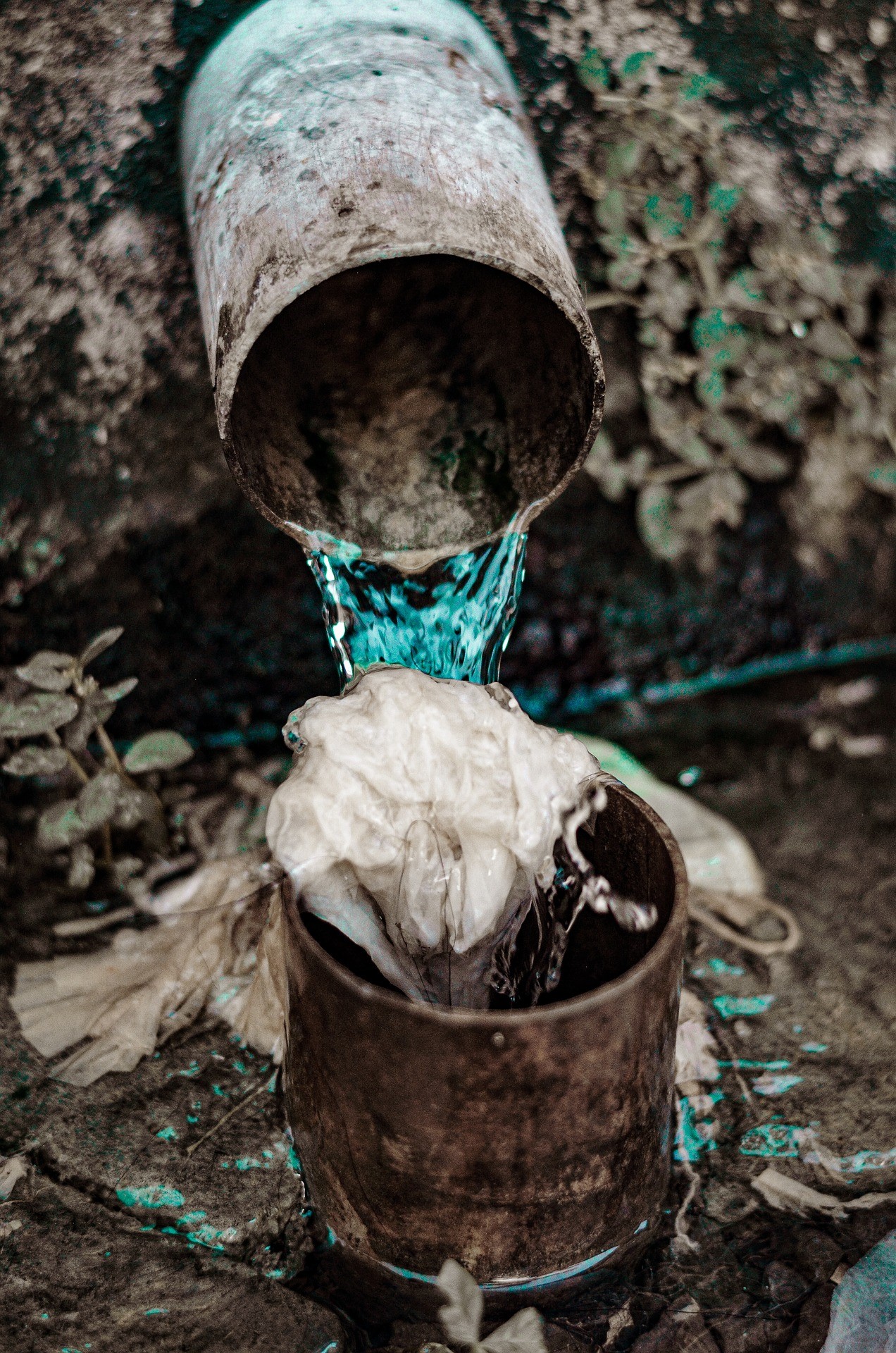
It took four years to devise a plan,
ten more to set it in place.
Anti-corrosive coating coursed through the pipes
for they hoped to at least save face.
A sample testing every six months
until they reached the target space.
That small random sample, selected how?
The plan did not ever specify that.
So, do they pick the few known to be safe?
Or, do they were devil's advocate hat
and pick some of both groups of ordinance plats --
then celebrate with both keg and vat?
Why then, test only every three years,
and why does it seem they allay their fears
by doing testing themselves instead of contracting 'all clears'?
~~~~~~~~~~
Quindecim: A Poetic Form that has developed rather naturally as I have written much regarding political and daily living events. The fifteen line stanza seems to work wonderfully by allowing twelve lines to describe the developing arena. Then the last three present some new development that throws a ‘curve ball’ into the mix. There is no specific syllabic or metric count. It is, however, rhymed with no set pattern. The patterns used should recur in a later quindecim when the poem consists of several stanzas. There is no set pattern for the recurrence.
~~~~~~~~~~
Lead paint was said to harm our babes;
we must scrape it all away.
'Twas taken to heart, and most did in spade
abide that law with dread array
of the fate to come their way
if 'twas not done as law did say.
So, homes were scraped inside and out,
then scrubbed with bleach for brand new paint.
The child of those who did sulk and pout,
'twas removed until parents' mood did abate.
Toys with lead, stores removed on that date,
but now WE learn of quite a spate.
That government did make those laws
but did not remove it from those claws
before they fed them with 'those paws.'
~~~~~~~~~~
Quindecim: A Poetic Form that has developed rather naturally as I have written much regarding political and daily living events. The fifteen line stanza seems to work wonderfully by allowing twelve lines to describe the developing arena. Then the last three present some new development that throws a ‘curve ball’ into the mix. There is no specific syllabic or metric count. It is, however, rhymed with no set pattern. The patterns used should recur in a later quindecim when the poem consists of several stanzas. There is no set pattern for the recurrence.
~~~~~~~~~~
~~~~~~~~~~





 by tkbrown
You must be logged in to post a comment.