Jesus is Tempted by Satan

Scripture is from the Holy Bible — New King James Version (NKJV)

Notes on Scripture (below) by tkbrown

Matthew 4:1-11

1 — “Then Jesus was led up by the Spirit into the wilderness to be tempted by the devil.”

2 — “And when He had fasted forty days and forty nights, afterward He was hungry.”

3 — “Now when the tempter came to Him, he said, ‘If You are the Son of God, command that these stones become bread.'”

4 — “But He answered and said, ‘It is written, Man shall not live by bread alone, but by every word that proceeds from the mouth of God.'”

5 — “Then the devil took Him up into the holy city, set Him on the pinnacle of the temple.”

6 — “and said to Him, ‘If You are the Son of God, throw Yourself down. For it is written: ‘He shall give His angels charge over you.’ and ‘In their hands they shall bear you up, lest you dash your foot against a stone.'”

7 — “Jesus said to him, ‘It is written again, You shall not tempt the Lord your God.'”

8 — “Again, the devil took Him up on an exceedingly high mountain and showed Him all the kingdoms of the world and their glory.”

9 — “And he said to Him, ‘All these things I will give You if You will fall down and worship me.'”

10 — “Then Jesus said to him, ‘Away with you, Satan! For it is written, ‘You shall worship the Lord your God and Him only you shall serve.'”

11 — “Then the devil left Him, and behold, angels came and ministered to Him.”

~~~~~~~~~~

Prophecy

v4 — Deuteronomy 8:3 — “So He humbled you, allowed you to hunger, and fed you with manna which you did not know nor did your fathers know that He might make you know that man shall not live by bread alone; but man lives by every word that proceeds from the mouth of the Lord.”

v6 — Psalm 91:11, 12

11 — “For He shall give His angels charge over you, to keep you in all your ways.”

12 — “In their hands they shall bear you up, lest you dash your foot against a stone.”

v7 — Deuteronomy 6:16 — “You shall not tempt the Lord your God as you tempted Him in Massah.”

~~~~~~~~~~

Related New Testament Scriptures

v11 — James 4:7 — “Therefore submit to God. Resist the devil and he will flee from you.”

v11 — Hebrews 1:14 — “Are they not all ministering spirits sent forth to minister to those who will inherit salvation?”

~~~~~~~~~~

Mark 1:11-13

11 — “Then a voice came from heaven, ‘You are My beloved Son, in whom I am well pleased.'”

12 — “Immediately the Spirit drove Him into the wilderness.”

13 — “And He was there in the wilderness forty days, tempted by Satan, and was with wild beasts, and the angels ministered to Him.”

~~~~~~~~~~

Related New Testament Scriptures

v11 — Matthew 3:17 — “And suddenly a voice came from heaven saying, ‘This is My Beloved Son, in whom I am well pleased.'”

v11 — Matthew 12:17, 18

17 — “that it might be fulfilled which was spoken by Isaiah the prophet, saying;”

18 — “‘Behold! My Servant whom I have chosen, My Beloved in whom My soul is well pleased! I will put My Spirit upon Him, and He will declare justice to the Gentiles.'”

v12 — Matthew 4:1-11 (See above.)

v12 — Matthew 4:10, 11 (See above.)

~~~~~~~~~~

Luke 4:1-14

1 — “Then Jesus, being filled with the Holy Spirit, returned from the Jordan and was led by the Spirit into the wilderness.”

2 — “being tempted for forty days by the devil. And in those days, He ate nothing, and afterword, when they had ended, He was hungry.”

3 — “And the devil said to Him, ‘If You are the Son of God, command this stone to become bread.'”

4 — “But Jesus answered him saying, ‘It is written, ‘Man shall not live by bread alone, but by every word of God.'”

5 — “Then the devil, taking Him up on a high mountain, showed Him all the kingdoms of the world in a moment in time.”

6 — “And the devil said to Him, ‘All this authority I will give You, and their glory; for this has been delivered to me, and I give it to whomever I wish.'”

7 — “‘Therefore, if You will worship before me, all will be Yours.'”

8 — “And Jesus answered and said to him, ‘Get behind me, Satan! For it is written, ‘You shall worship the Lord your God, and Him only you shall serve.'”

9 — “Then he brought Him to Jerusalem, set Him on the pinnacle of the temple, and said to Him, ‘If You are the Son of God, throw Yourself down from here.'”

10 — “‘For it is written: ‘He shall give His angels charge over you, to keep you.'”

11 — “‘and, ‘in their hands they shall bear you up, lest you dash your foot against a stone.'”

12 — “And Jesus answered and said to him, ‘It has been said, ‘You shall not tempt the Lord your God.'”

13 — “Now when the devil had ended every temptation, he departed from Him until an opportune time.”

14 — “Then Jesus returned in the power of the Spirit to Galilee, and news of Him went out through all the surrounding region.”

~~~~~~~~~~

Prophecy

v4 — Deuteronomy 8:3 — “So He humbled you, allowed you to hunger, and fed you with manna which you did not know nor did your fathers know that He might make you know that man shall not live by bread alone; but man lives by every word that proceeds from the mouth of the Lord.”

v8 — Deuteronomy 6:13 — “You shall fear the Lord your God and serve Him and shall take oaths in His name.”

Deuteronomy 10:20 — “You shall fear the Lord your God; you shall serve Him, and to Him you shall hold fast, and take oaths in His name.”

v9 — Matthew 4:5-7 (See above.)

v10 — Psalm 91:11 — “For He shall give His angels charge over you, to keep you in all your ways.”

v11 — Psalm 91:12 — “In their hands they shall bear you up, lest you dash your foot against a stone.”

v12 — Deuteronomy 6:16 — “You shall not tempt the Lord your God as you tempted Him in Massah.”

~~~~~~~~~~

Related New Testament Scriptures

v1 — Matthew 4:1-11 (See above.)

v13 — Hebrews 4:15 — “For we do not have a High Priest who cannot sympathize with our weaknesses, but was in all points tempted as we are, yet without sin.”

v14 — John 4:43 — “Now after the two days He departed from there and went to Galilee.”

v14 — Acts 10:37 — “. . . that word you know, which was proclaimed throughout all Judea, and began from Galilee after the baptism which John preached.”

~~~~~~~~~~

Notes on Scripture: by tkbrown

Here, I have presented the Scriptures which portray Jesus’ forty days and forty nights of fasting and prayer in the wilderness when Satan tempted Him. These Scriptures are found in Matthew, Mark, and Luke. While there may be slight differences in the wording of each account of the event, these are no more than would be found if three witnesses in a court of law presented accounts of a specific incident. This is important in the fact that all three testimonials also coordinate with Old Testament prophecy related to these Scriptures and with related Scriptures in the New Testament. Thus, we have ‘rightly divided the Word of Truth’ with regard to this event in Jesus’ life.

Forty days and forty nights is a long time to be without food, but this was done to show that Jesus’ Spirit form and the angels ministering to Jesus was sufficient to satisfy His human needs. This is another example of how God takes care of those who do His will. Jesus was tempted of Satan so we can know He understands the temptations we endure at Satan’s hand.

As our High Priest, Jesus’ understanding of our weaknesses regarding temptation is important. Had He never come to Earth in human form, He could never have truly understood our weakness or the desire to give in when Satan tempts us. God realized this was a faltering point in His righteous understanding of these weaknesses in man. Thus, Jesus understanding of the tendency to give in to temptations gives Him the ability to ‘argue our case’ with God and mediate with Him on our behalf. Hebrews 4:15 tells us this was God’s plan. We can look at the Scripture presented in Romans 3:21-26 to see how this all fits together.

Romans 3:21-26

21 — “But now the righteousness of God apart from the law is revealed, being witnessed by the Law and the Prophets,”

22 — “even the righteousness of God through faith in Jesus Christ, to all and on all who believe. For there is no difference;”

23 — “for all have sinned and fall short of the glory of God.”

24 — “being justified freely by His grace through the redemption that is in Christ Jesus,”

25 — “whom God set forth as a propitiation by His blood, through faith, to demonstrate His righteousness, because in His forbearance God had passed over the sins that were previously committed,”

26 — “to demonstrate at the present time His righteousness, that He might be just and the justifier of the one who has faith in Jesus.”

This well-known passage from Romans chapter 3 ties in to Satan’s temptation of Jesus and of man in his struggles to overcome temptation. God’s righteousness puts Him in a position of not fully understanding these trials. Through the centuries, the Jewish Law as given to Moses on Mount Sinai allowed Jesus’ forbearance and atonement (propitiation) of their sins to go back and cover all those sins that God had passed over before Christ was born. Now, God is shown to “be just and the justifier of the one who has faith in Jesus” (Romans 3:26).

Jesus is now ready to begin His ministry on Earth. In our next lesson, we will see Jesus begin to select His disciples as he begins to preach and to teach the multitudes. Join us as we look closely at each account of this process as presented in the gospels of Matthew, Mark, Luke, and John.

~~~~~~~~~~

Lesson One -- Scripture: Zacharias to Have Son . . . 
Lesson Two -- Scripture: Jesus' Birth Foretold . . . 
Lesson Three -- Scripture: Zacharias' Son, John, is Born . . . 
Lesson Four -- Scripture: Jesus is Born . . . 
Lesson Five -- Scripture: And Jesus Grew . . .
Lesson Six -- Scripture: John Begins His Ministry . . . 
Lesson Seven -- Scripture: Jesus is Introduced to the World . . . 
Lesson Eight -- Scripture: Jesus' Ancestral Lineage
Lesson Nine -- Scripture: Jesus is Tempted By Satan

~~~~~~~~~~

Photo above by: kieutruongphoto @pixabay.com.

~~~~~~~~~~

Zacharias to have son . . .

old antique bible as an open book with sunlight bursting from the pages

Scripture is from the Holy Bible — New King James Version (NKJV)

John the Baptist to be born

~~~~~~~~~~

Lesson Scripture — Luke 1:5-25

5 — “There was in the days of Herod the king of Judea, a certain priest named Zacharias, of the division of Abijah. His wife was of the daughters of Aaron, and her name was Elizabeth.”
6 — “And they were both righteous before God, walking in all the commandments and ordinances of the Lord blameless.”
7 — “But they had no child, because Elizabeth was barren, and they were both well advanced in years.”
8 — “So it was, that while he was serving as priest before God in the order of his division,”
9 — “according to the custom of the priesthood, his lot fell to burn incense when he went into the temple of the Lord.”
10 — “And the whole multitude of the people was praying outside at the hour of incense.”
11 — “Then an angel of the Lord appeared to him, standing on the right side of the altar of incense.”
12 — “And when Zacharias saw him, he was troubled, and fear fell upon him.”
13 — “But the angel said to him, ‘Do not be afraid, Zacharias, for your prayer is heard, and your wife Elizabeth will bear you a son, and you shall call his name John.'”
14 — “‘And you will have joy and gladness, and many will rejoice at his birth.'”
15 — “‘For he will be great in the sight of t he Lord, and shall drink neither wine nor strong drink. He will also be filled with the Holy Spirit, even from his mother’s womb.'”
16 — “‘And he will turn many of the children of Israel to the Lord their God.”
17 — “‘He will also go before Him in the spirit and power of Elijah, To turn the hearts of the fathers to the children, and the disobedient to the wisdom of the just, to make ready a people prepared for the Lord.'”
18 — “And Zacharias said to the angel, ‘How shall I know this? For I am an old man, and my wife is well advanced in years.'”
19 — “And the angel answered and said to him, ‘I am Gabriel, who stands in the presence of God, and was sent to speak to you and bring you these glad tidings.'”
20 — “‘But behold, you will be mute and not able to speak until the day these things take place, because you did not believe my words which will be fulfilled in their own time.'”
21 — “And the people waited for Zacharias, and marveled that he lingered so long in the temple.”
22 — “But when he came out, he could not speak to them, and they perceived that he had seen a vision in the temple, for he beckoned to them and remained speechless.”
23 — “So it was, as soon as the days of his service were completed, that he departed to his own house.”
24 — “Now after those days his wife Elizabeth conceived and she hid herself five months, saying”
25 — “‘Thus the Lord has dealt with me, in the days when He looked on me, to take away my reproach among people.'”

~~~~~~~~~~

Notes on Scripture — by tkbrown

Above, I have presented the scripture in Luke Chapter 1 regarding the birth of ‘John the Baptist.’ (The apostle, John, was not John the Baptist. They are two different men.) Zacharias was informed by the angel, Gabriel, that his wife — Elizabeth — would bear a son, and they were to call his name “John”.

Zacharias did not understand how, at his and Elizabeth’s advanced ages, she could give birth to a son. He asked Gabriel how he would know this was true. Gabriel informed him he would not be able to speak (he would be mute) the entire time — nine months — until John would be born. This was the consequence dealt Zacharias for not believing Gabriel, the angel of God.

Then we see that Elizabeth, who is in awe of being with child. She hides herself away for five months before she tells anyone.

I stopped the scripture here, and next week I will begin with verse 26 — which is the beginning of Mary being told — six months after Zacharias was told of John’s impending birth —  she would give birth to Jesus. John was six months older than Jesus and would pave the way for Jesus’ ministry here on earth.

We will review the high points of Jesus’ life here on earth, and I will present scripture from Matthew, Mark, Luke and John. It will take a few weeks to cover all of this. Then we will look a bit more closely at Jesus’ death, burial and resurrection.

Please come back each week to study the scripture with us and learn of Jesus’ life here on earth.

Have a Blessed Week

~~~~~~~~~~

Lesson 1: Zacharias to Have Son . . . 

~~~~~~~~~~

The ‘Word’ is Life

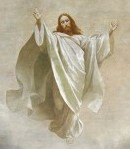
The Assension – c. 1893
Painting by Gebhard Fugel

John 1:1-5 (NKJV)
John 1:1 – In the beginning was the Word, and the Word was with God, and the Word Was God.”
John 1:2 – “He was in the beginning with God.”
John 1:3 – “All things were made through Him, and without Him nothing was made that was made.”
John 1:4 – “In Him was life, and the life was the light of men.”
John 1:5 – “And the light shines in the darkness, and the darkness did not comprehend it.”

~~~~~

John 14:6 (NKJV)
“Jesus said to him, ‘I am the way, the truth, and the life. No one comes to the Father except through Me.’

~~~~~

John 5:19-24 (NKJV)
John 5:19 – “Then Jesus answered and said to them, ‘Most assuredly, I say to you, the Son can do nothing of Himself, but what He sees the Father do, for whatever He does, the Son also does in like manner.‘”
John 5:20 – “‘For the Father loves the Son, and shows Him all things that He Himself does, and He will show Him greater works than these, that you may marvel.‘”
John 5:21 – “‘For as the Father raises the dead and gives life to them, even so the Son gives life to whom He will.‘”
John 5:22 – “‘For the Father judges no one, but has committed all judgment to the Son,‘”
John 5:23 – “‘that all should honor the Son just as they honor the Father. He who does not honor the Son does not honor the Father who sent Him.'”
John 5:24 – “‘Most assuredly, I say to you, he who hears My word and believes in Him who sent Me has everlasting life, and shall not come into judgment, but has passed from death into life.‘”

~~~~~

NOTES — by tkbrown

The apostle John tells the story of Jesus birth, life, death and resurrection from a perspective of love. He tells of the love that God had, and still has, for man. In a previous discussion, we leaned from . . .

John 3:16 – “God so loved the world that He gave His only begotten Son, that whoever believes in Him should not perish but have everlasting life.”

Holy Bible: The New King James Version

. . . God has no desire that any should perish. We also saw that God does not condemn any person; it is the lack of belief in His Son that condemns a person. If we believe, we can have everlasting life.

In John chapter 1, above, we are told that the “Word,” or Jesus, existed in the beginning – that He was with God, that He was God. This shows the connectedness of God the Father and God the Son.

In John 14:6, Jesus tells us He is the way, the truth and the life. He further states – no man [or woman] comes to the Father but by Him.

In John 5, verses 19 through 24, Jesus explains God’s expectation that He [Jesus – God’s Son] be honored just the same as we honor God. God has backed this up by granting judgment of all to Jesus, His Son. If we believe Jesus Christ is the Son of God, we will honor and obey Him just as we honor God. All who do this, will have life through Him [Jesus Christ – God’s Son].

Do you believe Jesus Christ is the Son of God? If you do, are you willing to say that in front of men? These are two requirements of anyone who wishes to become a Christian. If we do not believe, then we have already condemned ourselves. God does not have to condemn us. On the other hand, if we do believe, then God loves us as much as He loves His Son. If we obey all that Jesus commands of us, then God will give us life everlasting. How much more can He love us?

Do you love your children’s friends enough to give them a permanent home with you – and to make them joint heirs with your child? That is what God does. If we love His Son, Jesus Christ, then God will give us a permanent home and life everlasting. Again, I ask, how much more can He love us? This is love that goes beyond all other love.

Bless you for taking the time to read! Have a Blessed Lord’s Day!

For God so Loved theWorld — Part 2

~~ Notes: by tkbrown ~~
Photo by: Comfreak
at pixabay.com
Source: Holy Bible (NKJV)

In Part 1, we discussed the choice to ‘believe that Jesus Christ is the Son of God’ or ‘not to believe that Jesus Christ is the Son of God.’ It is our individual, personal choice whether or not we are saved by God. If we believe, then He offers a plan — through Christ Jesus — whereby we can be saved. If we do not believe, then we have already condemned ourselves to an eternity of darkness without salvation. Here, we can read this message directly from His word (NKJV).

John 3:16 — “For God so loved the world that He gave His only begotten Son, that whoever believes in Him should not perish but have everlasting life.

John 3:17 — “For God did not send His Son into the world to condemn the world, but that the world through Him might be saved.”

John 3:18 — “He who believes in Him is not condemned; but he wo does not believe is condemned already, because he has not believed in the name of the only begotten Son of God.”

While Jesus was on the earth in human form, He was given power to reveal this plan to all mankind through His personally chosen disciples. If we study the New Testament through, we can see how Jesus personally called His disciples — one by one — to follow Him and become ‘fishers of men.’ He did not choose these disciples from the educated and the elite of the synagogue or from the community. He chose ‘sinners’ whom He knew to possess the character traits necessary to understand His will and to relay that will to people from all nationalities and walks of life. Before He ascended back into heaven, He instructed these disciples in the manner to convey His power to those who would believe.

Matthew 28:18 — “And Jesus came and spoke to them, saying, ‘All authority has been given to Me in heaven and on earth.'”

Jesus assured His disciples that His time on earth was to impart His teachings to all mankind via the disciples. He assured them that God is concerned even about the grass in the field which is here today and gone tomorrow. If God loves even the grass in the fields, how much more does He love us. We who are made in His own image are loved so much that He sent His only Son to die on the cross as payment for the sins of those who choose to believe — thereby choosing salvation and eternal life with Him. First, we must seek His kingdom and His righteousness, then these things can be ours.

Matthew 6:30 — “Now if God so clothes the grass of the field, which today is and tomorrow is thrown into the oven, will he not much more clothe you, O you of little faith?

Matthew 6:33 — “But seek first the kingdom of God and His righteousness, and all these things shall be added to you.

The New Testament is the ‘last covenant’ or ‘will’ imparted from God to mankind. If we are to know what we can inherit, we must study that will and obey the commandments outlined within it. The guidelines are all spelled out for us in the New Testament of God’s word – the Bible. If we believe Him, we will study this covenant which was delivered via His Son’s death and we will strive to obey the blueprint presented. Paul told Timothy to continue in teachings outlined in the Scriptures which provide all that is needed for salvation.

2 Timothy 3:14 — “But you must continue in the things which you have learned and been assured of, knowing from whom you have learned them.

2 Timothy 3:15 — “and that from childhood you have known the Holy Scriptures, which are able to make you wise for salvation through faith which is in Christ Jesus.

2 Timothy 3:16 — “All Scripture is given by inspiration of God, and is profitable for doctrine, for reproof, for correction, for instruction in righteousness,”

2 Timothy 3:17 — “that the man of God may be complete, thoroughly equipped for every good work.”

Thus, if we choose to believe that Jesus Christ is the Son of God, we will study His word — the Bible — to discern His guidelines by which we might be saved. Once we have studied and obeyed the plan of salvation outlined in the Holy Scriptures, we must continue in His teachings. Even in His kingdom, we find those who strive to obey and those who do not obey. If we believe, we will obey His teachings because we believe that Jesus Christ is the Son of God who came to earth to provide a way by which we can be saved. Those who do not believe engage in profane babblings and wrest with the scriptures to their own destruction. Therefore, it is our will to be saved or to not be saved. God accepts the choice we make and will not force the issue. Do you believe? Will you obey? I pray that you will.

Faith . . .

So then faith comes by hearing, and hearing by the word of God.” — Romans 10:17 (NKJV)

Now faith is the substance of things hoped for, the evidence of things not seen.” — Hebrews 11:1 (NKJV)

Related image

“For God so loved the world “

~~ Notes: by tkbrown ~~
Photo by: Aaron Burden
at Unsplash.com
Source: Holy Bible (NKJV)
John 3:16-18

John 3:16 — “For God so loved the world that He gave His only begotten Son, that whoever believes in Him should not perish but have everlasting life.

John 3:17 — “For God did not send His Son into the world to condemn the world, but that the world through Him [His Son] might be saved.

John 3:18 — “He who believes in Him is not condemned, but he who does not believe is condemned already, because he has not believed in the name of the only begotten Son of God.

The first of these three verses is probably the most “quoted” scripture in the entire Bible. It is, also, probably the most misrepresented scripture in most of the Bible. The reason being, it is typically quoted out of context, instead of continuing with the next two verses that explain John 3:16 more thoroughly. Those two verses, John 3:17 and 18, are typically ignored.

I would ask that you look at the three verses together, rather than taking John 3:16 out of context. When we read them as a unit (paragraph, if you will), we see that He is telling us: the result of Jesus coming into the world to save the world is an individual choice. Either we believe Jesus Christ is the Son of God, or we do not believe. Either we believe God sent His Son, Jesus Christ, to save us from our sins — or we do not believe.

He takes this explanation one step further by presenting a metaphor. When we read between the lines, He tells us that He will deal with each individual as a parent would deal with each of his/her children individually. A parent would not punish all of her/his children for the guilt of one — would he/she?

God explains that He did not send Jesus Christ, his Son, to condemn the world, “but that the world through Him might be saved.” In verse 18, He explains that he/she who believes in Jesus Christ as God’s Son is not condemned — “but he who does not believe is condemned already, because he has not believed in the name of the only begotten Son of God.”

So, when all three verses are read, and discussed, together — we see that each individual human being decides her/his own fate. Either he/she believes in the name of Jesus Christ as the Son of God — and we are then saved — because we will follow His commandments. Or, we do not believe that Jesus Christ is the Son of God, and we are condemned already — because we do not believe, we have condemned ourselves.

It is as a parent disciplines her/his child(ren). The child who ‘took the candy’ condemned him/her-self by the taking of the candy. No one else forced her/his hand. He/she made that choice totally apart from the other child(ren). Those who were not involved in the taking of the candy, should not be punished for the sins of the one who did. That is how God deals with people in the world. It is a program of attraction or repulsion. Either the individual man/woman is believing in Christ Jesus and doing that which is right — and will, therefore, be saved by God. Or, she/he does not believe (a personal choice) — and has, therefore, condemned him/her-self to eternal damnation.

Which do you choose? Do you believe Jesus Christ is the Son of God — sent to the earth by God to save those who believe? Or, do you believe Jesus Christ was just a man or a prophet — who died like everyone else, and was not raised on the third day? If you believe the latter, you have already condemned yourself. God is not the one who condemns the non-believer – the non-believer condemns her/him-self.