Abraham Lincoln, 16th U.S. President, says he will free slaves in all states on January 1, 1863.

writer, author, poet, artist, reader
Abraham Lincoln, 16th U.S. President, says he will free slaves in all states on January 1, 1863.
“Peace begins with a smile . . . . ” Mother Teresa
This is true both internally and externally. The smile to another is the beginning of peace with that person. Also, one cannot achieve internal peace until he/she can smile. – tkbrown
‘I have shown you in every way, “by laboring like this, that you must support the weak. And remember the words of the Lord Jesus, that He said, ‘It is more blessed to give than to receive.‘”‘ ~~ Acts 20:35 (NKJV)
Give a little of yourself, get something in return . . .
Love someone in purest form, you may not be loved back
but, by giving of that purest love within
you learn to love yourself -- simply because of the giving.
In learning to love more of yourself
you become more intuitive, to your own needs --
and to those of others.
What greater blessing can He bestow -- but
     to mold us into a tool to aid another along the journey . . . ?


Life is bittersweet . . .
With everything you gain, you lose something . . .
With everything you lose, you gain something . . .
Until this is learned, life is fraught with unnecessary pain.
Only in learning to accept the losses in life
will we ever truly experience the blessings that we gain.


Nights are cooler now,
the days unbearably hot.
Fall will be here soon.

Cooler nights begin
to cool both ends of the days --
morning and evening.

Then the midday temp
brings forth a welcome relief -
color's bright array!

Hills and vales display
bright colors on God's palette -
Fiery, vibrant view!

Apples and pumpkins,
with acorn and butternut -
paint the food display.

Everywhere colors
show mellowing with the age -
quaintly beautiful!

Paving a path with love
as the end appears ahead -
a transitioning!
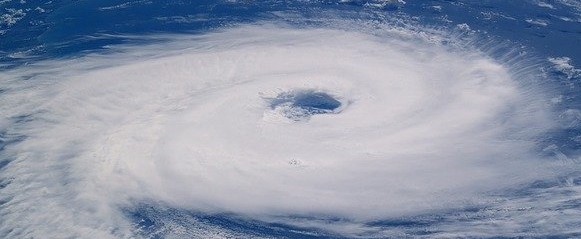
The hurricane blows,
a big limb spikes through the roof --
squirrel babes need home
~~~~~~~~~~
Haiku The traditional Japanese haiku is a three-line poem with seventeen syllables, written in a 5/7/5 syllable count format The haiku often focuses on images from nature. It emphasizes simplicity, intensity and directness of expression.
Haiku began in thirteenth-century Japan as the opening phrase of ‘Renga’, an oral poem which generally was one hundred stanzas in length — also composed syllabically. The much shorter haiku broke away from the renga in the sixteenth century. It was mastered a century later by Matsuo Basho, who wrote the following classic haiku:
An old pond!
A frog jumps in.
The sound of water.
As the haiku form has evolved, many rules have been broken. However, the philosophy of haiku has been preserved: the focus on a brief moment in time, a use of provocative, colorful images, an ability to be read in one breath; and a sense of sudden enlightenment and illumination.
The haiku philosophy influenced poet Ezra Pound, who noted the power of its brevity and juxtaposed images. He wrote, “The image itself is speech. The image is the world beyond formulated language (The Academy of American Poets).
Source: The Academy of American Poets. (29 February 2016). “Haiku: Poetic Form.” (10 September 2019). https://poets.org/text/haiku-poetic-form.
~~~~~~~~~~
Scottish bacteriologist, Alexander Fleming, discovered penicillin while studying influenza.
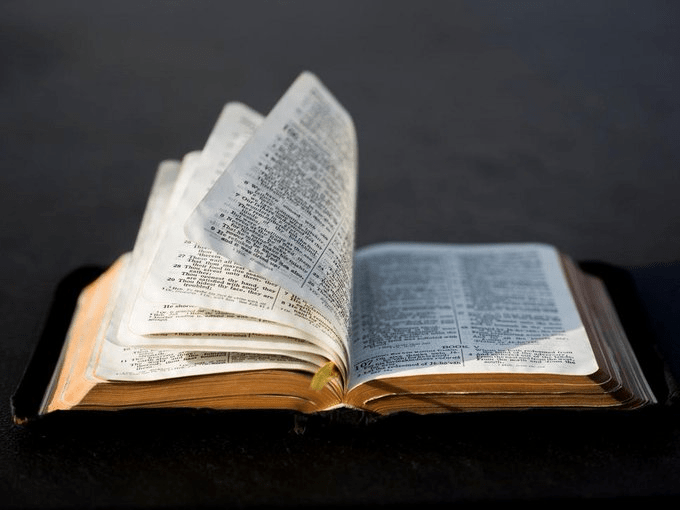
John 3:16 — “For God so loved the world that He gave His only begotten Son, that whoever believes in Him should not perish but have everlasting life.“
John 3:17 — “For God did not send His Son into the world to condemn the world, but that the world through Him [His Son] might be saved.“
John 3:18 — “He who believes in Him is not condemned, but he who does not believe is condemned already, because he has not believed in the name of the only begotten Son of God.“
The first of these three verses is probably the most “quoted” scripture in the entire Bible. It is, also, probably the most misrepresented scripture in most of the Bible. The reason being, it is typically quoted out of context, instead of continuing with the next two verses that explain John 3:16 more thoroughly. Those two verses, John 3:17 and 18, are typically ignored.
I would ask that you look at the three verses together, rather than taking John 3:16 out of context. When we read them as a unit (paragraph, if you will), we see that He is telling us: the result of Jesus coming into the world to save the world is an individual choice. Either we believe Jesus Christ is the Son of God, or we do not believe. Either we believe God sent His Son, Jesus Christ, to save us from our sins — or we do not believe.
He takes this explanation one step further by presenting a metaphor. When we read between the lines, He tells us that He will deal with each individual as a parent would deal with each of his/her children individually. A parent would not punish all of her/his children for the guilt of one — would he/she?
God explains that He did not send Jesus Christ, his Son, to condemn the world, “but that the world through Him might be saved.” In verse 18, He explains that he/she who believes in Jesus Christ as God’s Son is not condemned — “but he who does not believe is condemned already, because he has not believed in the name of the only begotten Son of God.”
So, when all three verses are read, and discussed, together — we see that each individual human being decides her/his own fate. Either he/she believes in the name of Jesus Christ as the Son of God — and we are then saved — because we will follow His commandments. Or, we do not believe that Jesus Christ is the Son of God, and we are condemned already — because we do not believe, we have condemned ourselves.
It is as a parent disciplines her/his child(ren). The child who ‘took the candy’ condemned him/her-self by the taking of the candy. No one else forced her/his hand. He/she made that choice totally apart from the other child(ren). Those who were not involved in the taking of the candy, should not be punished for the sins of the one who did. That is how God deals with people in the world. It is a program of attraction or repulsion. Either the individual man/woman is believing in Christ Jesus and doing that which is right — and will, therefore, be saved by God. Or, she/he does not believe (a personal choice) — and has, therefore, condemned him/her-self to eternal damnation.
Which do you choose? Do you believe Jesus Christ is the Son of God — sent to the earth by God to save those who believe? Or, do you believe Jesus Christ was just a man or a prophet — who died like everyone else, and was not raised on the third day? If you believe the latter, you have already condemned yourself. God is not the one who condemns the non-believer – the non-believer condemns her/him-self.
It took four years to devise a plan,
ten more to set it in place.
Anti-corrosive coating coursed through the pipes
for they hoped to at least save face.
A sample testing every six months
until they reached the target space.
That small random sample, selected how?
The plan did not ever specify that.
So, do they pick the few known to be safe?
Or, do they were devil's advocate hat
and pick some of both groups of ordinance plats --
then celebrate with both keg and vat?
Why then, test only every three years,
and why does it seem they allay their fears
by doing testing themselves instead of contracting 'all clears'?
~~~~~~~~~~
Quindecim: A Poetic Form that has developed rather naturally as I have written much regarding political and daily living events. The fifteen line stanza seems to work wonderfully by allowing twelve lines to describe the developing arena. Then the last three present some new development that throws a ‘curve ball’ into the mix. There is no specific syllabic or metric count. It is, however, rhymed with no set pattern. The patterns used should recur in a later quindecim when the poem consists of several stanzas. There is no set pattern for the recurrence.
~~~~~~~~~~

 by tkbrown
You must be logged in to post a comment.