My Morning Do . . . Pray for President Trump

~~ by tkbrown

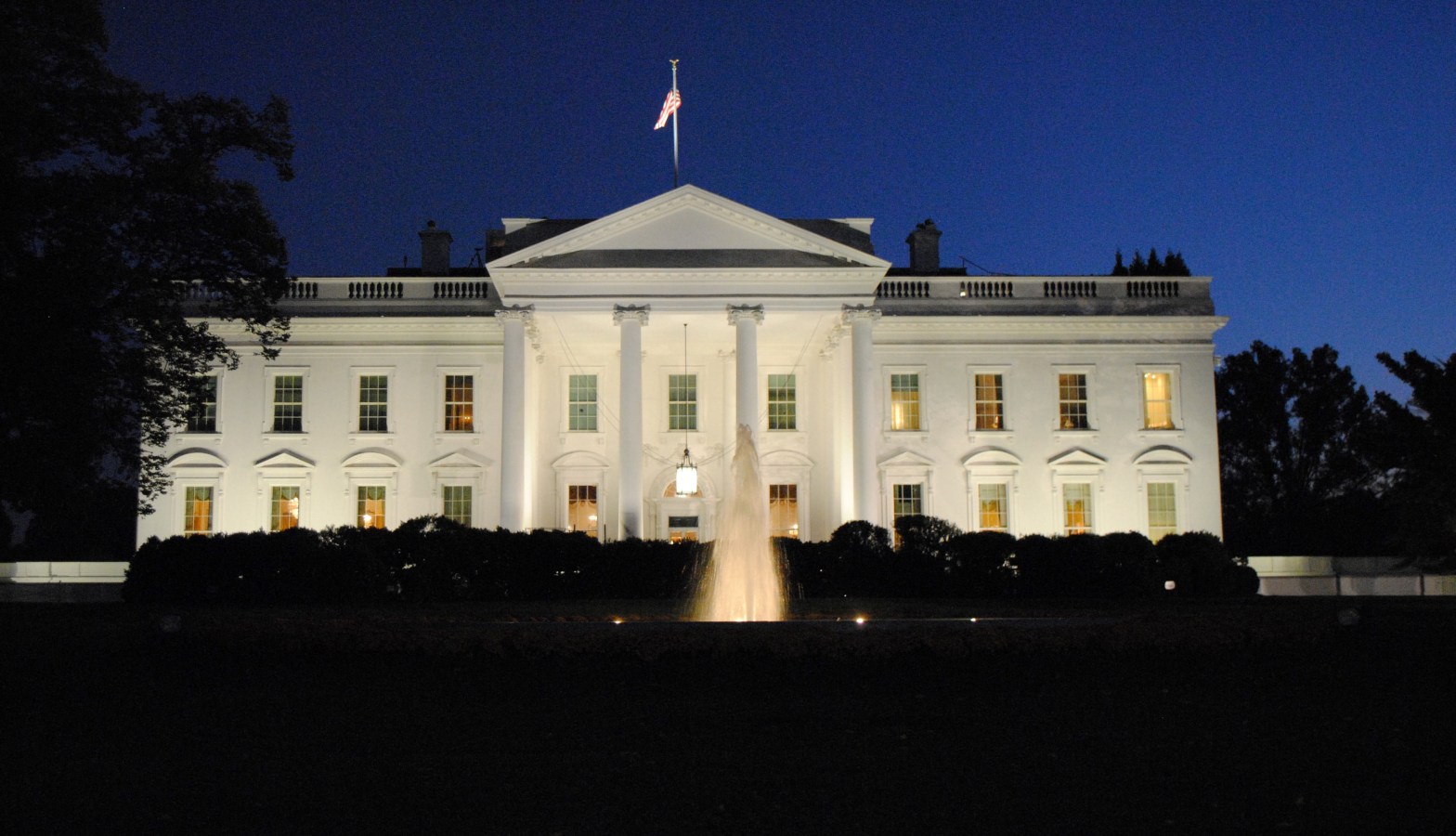
3 October 2020 — As we all probably know by now, President Trump and First Lady Melania Trump were diagnosed as having Coronavirus early yesterday morning. He has now admitted himself to Walter Reed Medical Center for treatment and monitoring. Now, several of his chief support staff and friends have tested positive for the virus. My prayers are with President Trump, First Lady Melania Trump, Vice-President Pence, Second Lady Karen Pence, and all close associates–those who have tested positive for Covid-19 and those who have not. My prayers are also with Democratic Presidential Nominee and Former Vice-President, Joe Biden and his wife Jill. I ask that all who believe in the power of prayer and faith join me in prayer for these and for our country.

The myriad reactions in the press to the virus finally reaching the White House has left me slack-jawed! I cannot believe the amount of negativity surrounding this development. When we focus so strongly on what is wrong, are we not increasing the likelihood of further testing by the powers that be? I pray our country can move past the negativity shown across the nation in recent months. If we want healing, our focus must move to those things that are right with an intentional movement to build upon them.

Every family goes through times when it seems everything goes wrong. Right now, our nation is in one of those times. When your family is surrounded by unpleasantness, do you contribute to it by ranting, raving, and assaulting one another? Or do you try to heal the problems . Every person in this nation has a right to his or her beliefs from one side of the political spectrum to the other. I respect this right in others even when I strongly disagree with the belief itself. I do not try to force anyone to believe as I believe or to act as I act. Right now, there is a strong push for everyone to move to the left. Be careful what you wish for! You just might get it!

~~~~~~~~~~

Photo Above: by Tabrez Syed on Unsplash.com.

~~~~~~~~~~

My Morning Do . . . Grief and Proactivity

~~ by tkbrown

26 September 2020 — As I mentioned in my previous post, depression associated with grieving is a normal reaction to loss. There are myriad possibilities as to what the loss may be, and one will be dealt with a bit differently from another. If addressed proactively as the grieving process progresses, oftentimes serious depression can be avoided. However, if one does begin finding it difficult to engage normal daily living activities, it may be necessary to schedule a few days to work on specific areas of concern. This can be accomplished alone or with the help of a person who has already proven to be a trustworthy support person in the grieving process.

Depression slows one down during the grieving to aid the introspective work necessary to move past it and into some level of acceptance. Taking some time for inner exploration will speed the path to recovery. There are ways to address the depression on your own, without any outside help if these activities are begun before recognizable impairment develops.

One way to move into and through depressive thoughts is to journal. Set aside a time each day to record thoughts in a composition notebook. Sitting in a quiet place, away from any possible interruptions, begin writing–whatever you are thinking at the time. If what you write does not make sense, this is ok.

The purpose of this portion of the journaling activity is to see the organization of your thoughts. Try not to miss any words — stream of thought is important. Write quickly; slow transcription of thought to paper can cause thoughts to wander due to distraction which causes inaccurate reflection. Recording of thoughts should continue for five to ten minutes. Set a timer or an alarm so concerns about the time do not interrupt the flow of thought.

When time has elapsed, take five minutes to free your mind. Then, read over what has been written. Try to note any patterns or specific lines of thought. Note topics and related concerns on a clean sheet of paper. Then take fifteen minutes to write about worries–concerns noted since your last journaling exercise. Elaborate a bit on each. Discuss specific thoughts noted to be interrupting normal activity.

Now, list some enjoyable activities. Hobbies of a creative nature are often helpful in overcome disruptive depression. If drawing or painting are enjoyable options, express feelings in the art. Draw or paint feelings onto paper or canvas. There are no right or wrong approaches. Just draw, sketch, or paint using charcoal, coloring pencils, pastels, or paints as mediums.

Other creative activities to consider include writing (i.e., poetry or prose), needlecrafts such as sewing, quilting, knitting, crocheting, embroidery, cross-stitch. Cooking, (i.e., making breads–rolls, loaf breads, even cookies) anything that allows complete distraction from the loss. These activities will assist the process of moving through the depression to beginning life again after the loss. Acceptance involves learning to live with the loss. Fill time, previously engaged by the loss, with activities and people you enjoy.

As enjoyable activities continue, begin taking ten or fifteen minutes of daily journaling time to discuss the previous day’s activities. Describe your perceptions of the creative activities and endeavors being pursued. Write anything coming to mind. The goal is to slowly notice movement back into a normal activity level.

The loss will always be a part of the person you become. As you remember positive aspects previously brought to life by the loss, begin to focus on ways related memories are transitioning into strengths and creating the “you of tomorrow.” Proactive approaches, such as journaling and conscious activation of hobbies can be very helpful to resuming normal daily living.

~~~~~~~~~~

7 September 2020 — National Buy a Book Day

~~ by tkbrown

I just learned, 7 September has been designated both National and International Buy a Book Day! So, if you have been eyeing that one certain book that will enhance your library–or your mind–just so, this is the day to BUY IT!! With all of the digital learning today, I worry that it will be relied upon to the exclusion of establishing personal libraries in our homes. Personally, there is no better feeling than to curl up in a corner with a book in hand and consume it.

Really though, if we neglect to establish a personal library in our homes, we are missing a great opportunity to let our families and other people know what we are about. Through physical books, we can leave a legacy of history that is lost when obtained in digital learning and reading. If you prefer the digital reading experience, that is all well and good, but think on what you have read–that which reflects the person you are–and choose some good books reflecting the same values to purchase. Your library will thank you for it, and one day your children and grandchildren will too!

I am all for digital learning, digital sharing, and for making that digital learning a shared experience with the underprivileged who may not have the means to access it. Digital libraries should be available just like physical libraries. Children today should be able to access any topic of interest and learn about it without it costing them. It does not cost to check out a book at the physical library–so long as it is either returned or renewed by the designated date. I believe digital libraries should offer the same. If we want our children to progress with the digital age, we must make it available to them–all of them! While it is necessary for parents to be aware of the content a child is accessing, it should be available. Just like healthy food is necessary for growing a healthy physical body, books and the reading of them–digitally or in hand–is necessary for growing a healthy and informed mind.

Sooooo, DO YOUR PART–BUY A BOOK TODAY!

Women in American History

          by tkbrown

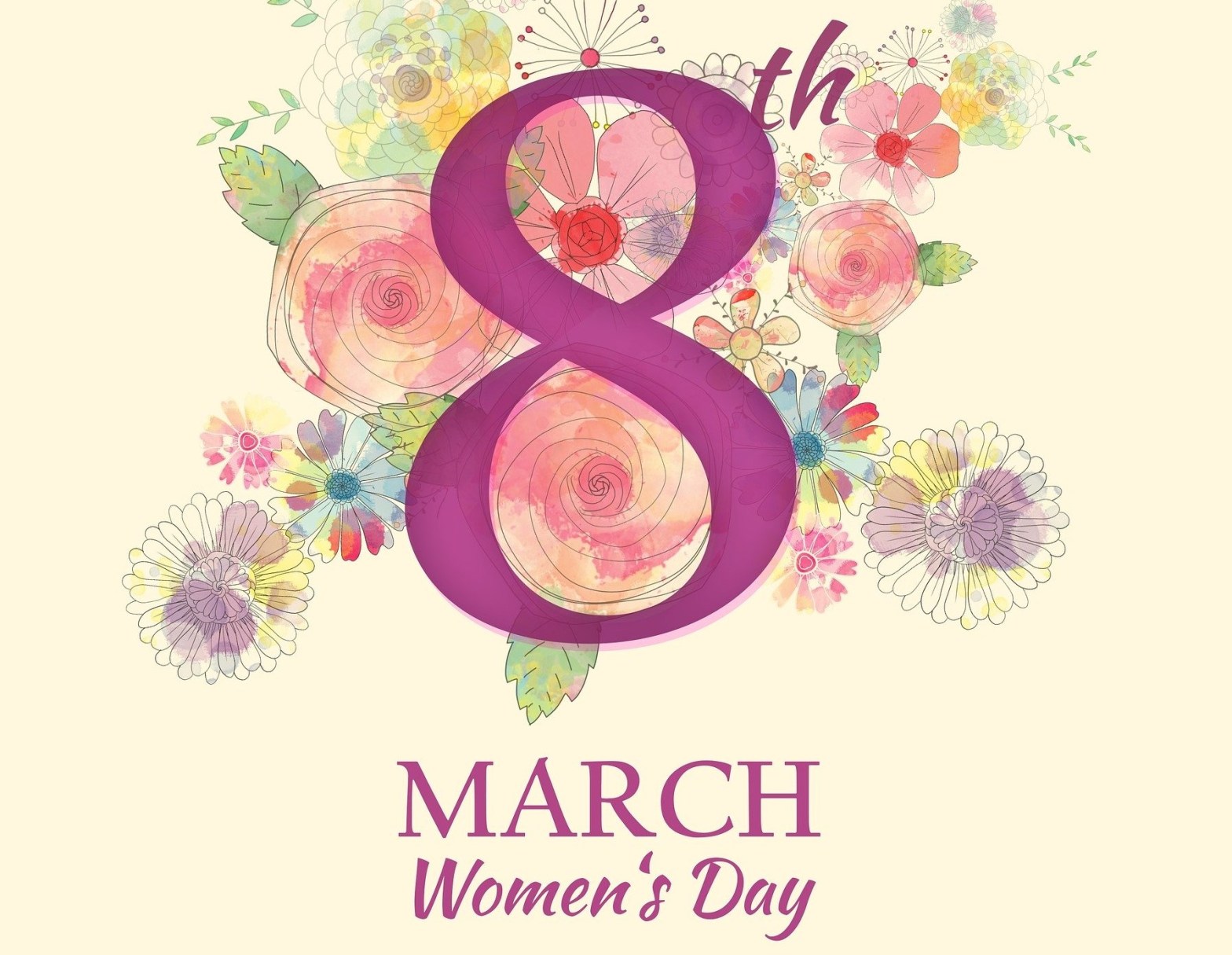
March 8 is International Women’s Day. Activities to celebrate this day began in 1911. The United Nations commemorated the day in 1978 and officially recognized it in 1980. That same year, President Jimmy Carter formally declared the nation’s first official National Women’s History Week beginning March 8, 1980: thus, explaining the choice of March 8 for International Women’s Day. With annual activities celebrating the achievements of women, the focus began to shift — highlighting issues of equality, opportunity, advancement and recognition of women vs men.

From a personal viewpoint, during the years of my childhood, little was said about women’s history, much less their rights. The sixties were dominated by the hippie movement and women across the nation began burning their bras — tsk, tsk — to recognize the celebrated masculinity and the virtual ignorance of contributions made by the feminine gender.

Inequality between men and women has existed through the ages. In the United States, the first woman known to have brought attention to this fact was Abigail Adams — wife and future First Lady to John Adams, Second President of the newly formed United States of America. On 31 March 1776, Ms Adams penned a letter to her husband and to the Continental Congress. In it, she asked that they “remember the ladies” as they worked to develop new laws suitable to the endeavors of a new nation under formation. She cautioned the men to “be more generous to the ladies than their ancestors had been.” Ms Adams went on to warn them of impending rebellion by ‘their ladies’ if the situation were not addressed because “the colonial women would not be bound by any laws not co-founded by them,” (Eds. history.com). Ms. Abigail Adams is not alone in addressing this cause. Many women in America have promoted women’s rights; some made history in so doing. Thus, from the outset, American women have run the gamut from imploring to demanding the American men remember their rights.

However, the new nation was busy with growth and development. For the most part, no one paid any attention to the women until Susan B Anthony was denied the right to speak at a temperance convention in 1841. She quickly added women’s rights to her alcohol and abolitionist endeavors. Anthony, a teacher raised in a Quaker household, was a staunch supporter of anti-slavery activity — through which she met Elizabeth Cady Stanton, The two co-founded the New York Temperance Society. Soon after, they formed the New York State Women’s Rights Committee, and Anthony served as an agent for the American Anti-Slavery Society. Joint efforts with Stanton eventually led her to head the National American Woman Suffrage Association.

In 1868, the two women began producing a weekly publication designed to promote women’s rights. The Revolution’s motto was “men their rights, and nothing more: women their rights, and nothing less,” (Eds, biography.com, 2019).

In a nation that prided itself upon freedom, justice and domestic tranquility, Susan B Anthony and Elizabeth Cady Stanton shined a bright light on the inequality of men vs women by promoting women’s right to vote. Until they set about securing the passage of Amendment 19 to the United States Constitution, little thought was given to the fact that women had been denied freedom, justice and equality by being perceived as the property of husbands, fathers and brothers. The fact that women were denied the right to vote spoke volumes to women being viewed as non-persons. Other women involved in the Suffragists push for women’s right to vote were Carrie Chapman Catt, Clara Barton, Elizabeth Smith Miller and her daughter Annie Fitzhugh Miller to name a few. The National American Woman Suffrage Association holds a Collection of documents depicting the work of these women and many others — the size of which defies imagination. First introduced in Congress in 1878, the 19th Amendment was finally approved 4 Jun 1919, and on 26 August 1920, Secretary of State Bainbridge Colby certified the 19th Amendment’s ratification.

The push for women’s rights calmed a bit following ratification of the Nineteenth Amendment. The Roaring Twenties, the Depression Era and World War II dominated the scene. During the latter, women took charge at home while men went to fight for world freedom. Jobs traditionally held by men were now filled by women. The stay at home lifestyle gave way to the country’s economic needs, the needs of servicemen overseas and the necessity of a paycheck to fund the home, food, clothing and other family needs. Some women even joined the men in the fight for freedom around the world.

With the end of World War II, the men returned to resume earning the paychecks and the women returned to the background — keeping the home fires burning — while launching a period of prosperity and the ‘baby boom.’ As the Vietnam War spawned the above-mentioned hippie movement, the focus was on ‘make love, not war’ as the desire for a return to peace flamed across the nation. Demonstrations for peace turned violent and the need for women in the workforce returned.

A burst of feminism resulted in newfound energy directed toward passage of the Equal Rights Amendment (ERA). First written by Alice Paul and Crystal Eastman, the original push for the ERA was proposed in 1923. Failing to pass Congress most every year until October 1971 when Representative Martha Griffiths introduced it once more, it finally passed the U.S. House of Representatives. It moved forward for Senate approval on 22 March 1972 and was submitted to State Congresses for ratification with a deadline of 22 March 1979. Thirty-eight states ratified the ERA, then four rescinded their state’s ratification. The legislatures extended the deadline to 30 June 1982 when, due to lack of additional ratifications, it was tabled.

In 1987, Congress declared March to be National Women’s History Month, and a special Presidential Proclamation issued every year highlights achievements of American Women. The United States, the United Kingdom and Australia have all designated March as the month for such celebrations. In Canada, Women’s History is recognized during the month of October. As efforts continue toward “Equality of Rights under a law designed to ensure that no right shall be denied or abridged by the United States — or by any State — on account of sex,” (Carter, 1980: quoted from MacGregor, 2019), the need for our message of equality at school, at work and at play continues.

~~~~~~~~~~

The image above by Marketa Machova from pixabay.com

~~~~~~~~~~

Sources:

Cohen, Sara E. (14 February 2020). 200 Years after Susan B Anthony’s Birth, Examining Her Role in the History of Women.s Voting Rights. Because of HER Story. Smithsonian. Washington D.C., USA. (2 March 2020). https://womenshistory.si.edu/news/2020/02/200-years-after-susan-b-anthony’s-birth-examining-her-role-history-women’s-voting.

Eds, biography.com, (16 July 2019), Susan B Anthony Biography: Editor, Civil Rights Activist, Publisher, Journalist (1820-1906). A&E Television Networks. (22 September 2019). https://www.biography.com/activist/susan-b-anthony.

Eds, First Ladies Biography. (2 March 2020). Abigail Adams. First Lady Biography. The National First Ladies’ Library. Canton, Ohio. (2 March 2020). http://www.firstladies.org/biographies/firstladies.aspx?biography=2.

Eds, history.com. (28 July 2018). Equal Rights Amendment passed by Congress. History. A&E Television Networks. (2 March 2020). https://www.history.com/this-day-in-history/equal-rights-amendment-passed-by-congress.

Eds, history.com. (26 February 2019). Milestones in Women’s History: A Timeline. A&E Television Networks. (22 September 2019). https://www.history.com/topics/womens-history/womens-history-us-timeline.

Eds, Wikipedia. (23 February 2020). Equal Rights Amendment. Wikipedia: The Free Encyclopedia. Wikimedia Project Powered by MediaWiki. (2 March 2020). https://en.wikipedia.org/wiki/Equal_Rights_Amendment.

Hamlin, Kimberly A. (1 March 2020). The problem with women’s history month in 2020. The Washington Post. WP Company LLC. Washington D.C., USA (2 March 2020). https://www.washingtonpost.com/outlook/2020/03/01/problem-with-womens-history-month-2020/.

MacGregor, Molly Murphy. (2019). Why March is National Women’s History Month. National Women’s History Alliance; Santa Rosa, California. (2 March 2020). https://nationalwomenshistoryalliance.org/womens-history-month/womens-history-month-history/.

Researchers, Library of Congress. (13 June 2019). 19th Amendment to the U.S. Constitution. Primary Documents in American History. The Library of Congress: Web Guides. Washington D.C., USA. (2 March 2020). https://www.loc.gov/rr//program/bib/ourdocs/19thamendment.html#top.

Willingham, AJ. (1 Mar 2020). Why Women’s History Month is in March. Represented. CNN. Atlanta, Georgia (2 March 2020). https://www.cnn.com/2020/03/01/us/womens-history-month-why-march-trnd/index.html.

Zorthian, Julia. (1 March 2018). This is How March Became Women’s History Month. Time. Time USA, LLC. (2 March 2020). https://time.com/section/us/.

~~~~~~~~~~
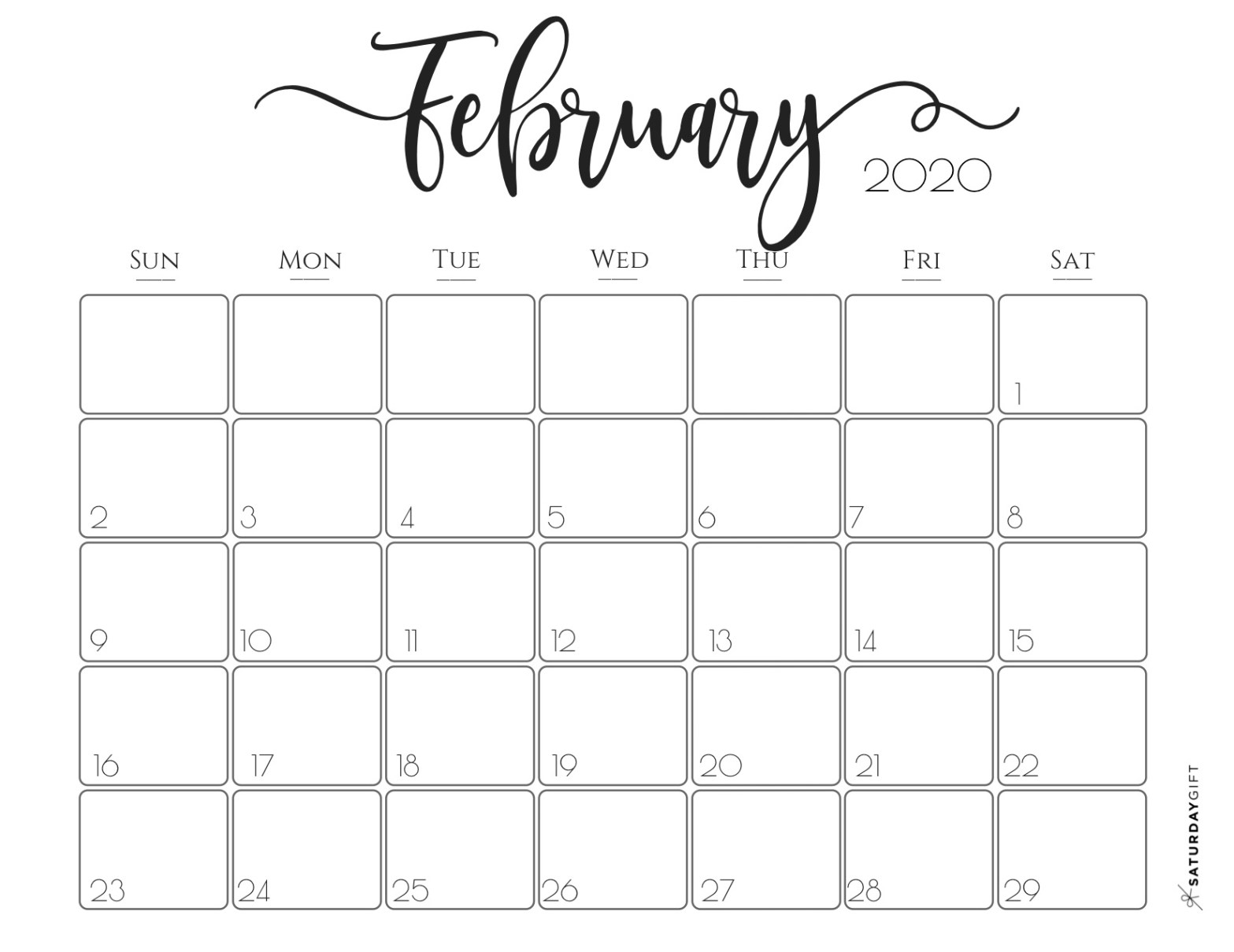
~~ 29 February 2020 ~~ Leap Day and Leap Year

by tkbrown

What is Leap Year, Leap Day? Why do we have them?

Prior to the establishment of the Julian Calendar in 45 B.C., there were no Leap Days or Leap Years. When Julius Caesar implemented the current calendar, he added ten days to the 355-day year in the Roman Calendar. He also changed the date of New Year’s Day from March 1 to January 1 and added a leap day every four years.

The Roman Calendar embraced a ten-month, 355-day year based on the lunar cycle. Each month had three phases: Kalends, or the ‘new moon’ coincided with the first of the month; Nones, defined by the first quarter-moon occurred on the fifth or seventh day of the month; Ides, the first full moon designated either the 13th or the 15th day of the month. Then, with the next Kalends, a new month began.

New Year’s Day in the Roman Calendar occurred on March 1 instead of the Julian Calendar’s January 1. The New Year’s Day Celebration, however, occurred on March 15th (during the first full moon) instead of March 1st (the actual New Year’s beginning day). The full moon probably made partying more enjoyable by increasing visibility. Celebrations included food, music and other festivities.

Then came the Gregorian Calendar with skipped days and relived days to really confuse things. First introduced in October 1582 by Pope Gregory XIII — for whom it is named. According to http://www.timeanddate.com, it is the most widely used Calendar around the world. Catholic countries adopted the calendar quickly with Spain, Portugal and Italy Leading the Group. It has been adopted by the international standard for Representation of date and times, (Hocken, 2017).

Protestant countries were leery of adopting the new calendar, fearing it to be a way of silencing the Protestant movement. Two hundred years after it was introduced, an Act of Parliament declared it to be the new Calendar for England and the (then) colonies, and the date immediately changed from September 2 to September 14, 1752, (Hocken, 2017).

Hocken on http://www.timeanddate.com quotes Benjamin Franklin, who “famously wrote about the switch in his almanac. ‘ . . . And what an indulgence is here, for those who love their pillow to lie down in Peace on the second of this month and not perhaps awake till the morning of the fourteenth.'” (Quoted by timeanddate.com from Cowan, 29; Irwin, 98).

“Orthodox countries followed the Julian calendar even longer, and their national churches have still not adopted Pope Gregory XIII’s calendar,” (Hoken, 2017).

Leap Year and Leap Day come with heaps of folk-lore attached. Leap Year, commonly known as an open opportunity for the woman to propose marriage to her love, does not encourage marriage that same year. It is supposedly unlucky for couples to marry during Leap Year.

Tell me what YOU think!

Sources:

Hocken, Vigdis. (14 November 2017). “Leap Day Customs & Traditions.” Time and Date AS. (28 February 2020). https://www.timeanddate.com/date/leap-day-february-29,html.

Hocken, Vigdis. (14 November 2017). “The Gregorian Calendar.” Time and Date AS. (28 February 2020). https://www.timeanddate.com/calendar/gregorian-calendar.html.

Lincoln’s Gettysburg Address

On This Day – – – 19 November 1863

by tkbrown

On This Day in 1863, Abraham Lincoln – 16th President of the United States of America – spoke at the Hatless centre in Gettysburg, Pennsylvania. As Ray Setterfield’s (OnThisDay.com) article title states, it was “Words That Echoed Down The Decades”. Those words became known across our nation and around the world as one of the greatest speeches ever delivered anywhere at any time. Setterfield begins by stating “The Gettysburg Address, in which President Abraham Lincoln spoke of all men being created equal and ‘government of the people, by the people, for the people’ . . . . ” was the honor he gave to fallen soldiers of the American Civil War Battle of Gettysburg ” during the dedication of the Soldiers’ National Cemetery . . . four and a half months after the pivotal battle took place. Words spoken on that day have been referenced in many powerful addresses. During and after the dedication, which lasted only a few minutes, Setterfield cites Edward Everett (who had spoken long just prior to President Lincoln) as reporting that the audience was spellbound to the point you could actually hear a collective inhalation afterward which reflected the intensity of the impact felt by those who had been fortunate enough to hear Lincoln’s address. He reports, “In the silence of the next moment Everett leapt to his feet again and said, as nearly as I can remember, this: ‘We have just listened to a speech that will live through the ages’ (Carter, A. 1940.)”

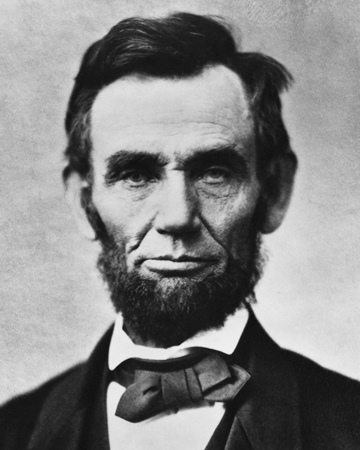
Abraham Lincoln — 16th President of the United States of America
Presidential Term: 4 March 1861 — 15 April 1865
Member of the U.S. House of Representatives from Illinois’ 7th District
Member of the Illinois House of Representatives
Born: 12 February 1809 — Hodgenville, Kentucky, U.S.A.
Died: 15 April 1865 (by assassination) Ford’s Theater; Washington, D.C., U.S.A.
To Quote 'OnThisDay.com.: "Lincoln's actions preserved the Union and pulled
the United Statesthrough its greatest political, military and moral crisis."

The following link will allow you to hear and read the words Abraham Lincoln spoke that day — 19 November 1863. Please listen and watch with Patriotic Reverence.

Sources: Eds. (19 November 2019). "Abraham  Lincoln". OnThisDay.com., online.
(19 November 2019).
https://www.onthisday.com/people/abraham-lincoln?utm_source=On+This+Day+in+History+by+OnThisDay.com&utm_campaign=8c2e794e01-DE+GE&utm_medium=email&utm_term=0_b15ebf209d-8c2e794e01-113092938.
Setterfield, Ray. (4 September 2017). "Words That Echoed Down The Decades".
OnThisDay.com., online. (19 November 2019).
https://www.onthisday.com/people/abraham-lincoln?utm_source=On+This+Day+in+History+by+OnThisDay.com&utm_campaign=8c2e794e01-DE+GE&utm_medium=email&utm_term=0_b15ebf209d-8c2e794e01-113092938.
Note: Setterfield's Source: Carter, A.R.C. (1940). Let Me Tell You.
Hutchinson and Company.

Pick Yourself Up . . .

Picture Quotes
picturequotes.com

~~ an Essay ~~

~~ by tkbrown

When I was growing up, my mamma and daddy quoted a lot of ‘old sayings’ in response to situations encountered in daily living. Oftentimes, when I was discouraged by not succeeding at something I had tried, my mamma would say, “Pick yourself up, dust yourself off, and try it all over again.” At the time, I did not realize just how much her sayings helped me to do just that — move on. Inevitably, when I tried again, I would move closer to my intended goal. This would encourage me, and I would keep trying. Each time, as I moved a little closer to my goal, I was encouraged just enough to ‘try again.’

I thought of and referred to the saying earlier tonight, and I decided to find out from whence the saying derives. So, I did a Google search on it. According to Wikipedia, the source most readily credited is The song, “Pick Yourself Up,” sang by Frank Sinatra, composed by Jerome Kern in 1936 with lyrics written by Dorothy Fields. Wikipedia provides some further information regarding the song. “Like most popular songs of the era, it features a 32-bar chorus with an extended coda. It’s rhyming scheme is AABA style, with some variations among the A sections.” The song was first introduced by Fred Astaire and Ginger Rogers in the 1936 film ‘Swing Time.’ Astaire also recorded the song on his own that year for the Brunswick lable (Eds. Wikipedia). In addition, Wikipedia shows the song was recorded by several other artists and has been utilized by a number of television shows through the decades.

While I do not believe the ‘old saying’ originated with the song, I do believe it became more prominent with the publication; and it brought the words to my mammas attention. I am grateful it did. Many is the time that I relied on strength from these words. It is a strength I tried to hand down to my children; hopefully, they are now passing it down to their children.

Since I believed the song was not the origin of the saying, a bit more research reveals it probably stems from Isaiah 52:2 in the Old Testament of the Holy Bible.
“Shake yourself from the dust, arise;
Sit down, O Jerusalem!
Loose yourself from the bonds of your neck,
O captive daughter of Zion!” (NKJV)

This scripture, in combination with the rest of Isaiah Chapter 52, references the decline of Israel during and after their captivity in Egypt. In this chapter, Isaiah is telling Israel it is time to get over what has happened to them and start anew.

Thus, it is my belief that this ‘old saying’ derives from scripture — as does, in all probability, the song. Below, I provide the words to the song, as recorded by Frank Sinatra. I also provide links to YouTube recordings by Frank Sinatra and by Nat “King” Cole. Enjoy all three, then tell me what you think. Does this ‘old saying’ originate with scripture in Isaiah Chapter 52, Verse 2 — or does the song implement the saying?

Frank Sinatra
Photo from: biography.com
Pick Yourself Up
Sang By: Frank Sinatra

Now nothing's impossible, I've found for when my chin is on the
ground,
I pick myself up, dust myself off, and start all over again.
Don't lose your confidence if you slip, be grateful for a pleasant trip,
and pick yourself up, dust off, start over again.
Work like a soul inspired until the battle of the day is won.
You may be sick and tired, but you be a man, my son.
Will you remember the famous men who have to fall to rise again?
So, take a deep breath, pick yourself up, start all over again.

You gotta work like a soul inspired until the battle of the day is won.
You may be sick and tired, but you be a man, my son.
Will you remember the famous men who have to fall and then to rise
again?
So, take a deep breath, pick yourself up, dust yourself off, and start all
over again.

Once again now:
Will you remember the famous men who have to fall and then rise
again.
So, take a deep breath, pick yourself up, dust yourself off, and start
all over again.

That's enough now.

Source:
LyricFind
Composed 1936 by Jerome Kern with lyrics by Dorothy Fields.
Pick Yourself Up lyrics (copyright) Universal Music Publishing Group,
Shapiro Bernstein & Co. Inc.

The following link will take you to the performance by Frank Sinatra:
Argosy34 — You Tube — 10 July 2010.
https://youtu.be/3EFPJL1uQbs

The recording by Nat “King” Cole and George Shearing includes lyric variations. The following link will access their version:
Paolo Pineda — You Tube — 20 June 2011.
https://youtu.be/QqC5YtutWAU

Sources:
Eds. (2019). Bible Hub: Isaiah 52:2 — New King James Version (NKJV). (11 November 2019). https://biblehub.com/isaiah/52-2.htm.

Eds. (2019). Google: Pick Yourself Up. (11 November 2019). Google. https://www.google.com/search?sxsrf=ACYBGNRImrm4Hd_wNUA7FweTdlSVnmWCOg%3A1573457900640&source=hp&ei=7A_JXY6BJYexgget-pmYDA&q=pick+yourself+up+dust+yourself+off+and+start+all+over+again+lyrics&oq=&gs_l=psy-ab.1.4.35i362i39l10.0.0..7989…0.0..0.135.135.0j1……0……gws-wiz…..10.HCwL6mZ6lJU.  

Eds. (2 September 2019). Wikipedia: Pick Yourself Up. Wikimedia project, Powered by MediaWiki. https://en.wikipedia.org/wiki/Pick_Yourself_Up.

Halloween and Children’s Safety . . .

by tkbrown —

Halloween is coming up, and the safety of all children should be front and foremost in our minds. The past two to three decades has seen a spate of evildoings with regard to the Trick-or-Treat activities. Many have reported receiving candy with poison, straight-edged razor particles, straight-pins, needles, etc. embedded. Only evil people would do such a thing. Therefore, it is up to the communities to protect the children.

In decades past, alternative practices have been coordinated as part of a collaborative effort to protect the children. Hospitals began offering ‘free of charge’ x-ray services to detect metal particles in candy. Churches began coordinating ‘Trunk-or-Treat’ activities for the children in the community and for those who wished to visit. Neighborhoods began coordinating ‘Trick-or-Treat’ for the children within and for the friends and relatives of those children. Many efforts have been launched to protect our children on Halloween. There are not, currently, as many reports of such evil atrocities occurring on Halloween as there have been in decades past. For this, I am thankful.

If you have a child, or children, who will be participating in ‘Trick-or-Treat,’ please take precautions to protect them. It is better to limit the treats received in a protective environment, than to expose them to the evils noted above and possibly others to which we have not been alerted. When the children go Trick-or-Treating, go with them. Have one or two adults go along to ensure their safety, while one or two stay behind to give ‘safe’ treats to those who come to call.

Let’s all join hands in this effort to ensure a Happy and Healthy Halloween for all!!!!!

~~~~~~~~~~

Photo Above: by mumby.com.

~~~~~~~~~~

Lead Pipes . . .

~~ an Essay ~~

~~ by tkbrown

According to the Associated Press (Porter and Catalini), lead pipes — in cities across America — are poisoning our children . . . and us . . . via the water that is piped into our homes. Tainted water in Washington D.C. was just the beginning. Then came the Flint, Michigan water scandal . . . and now Newark, New Jersey.

The human body, our domestic animals . . . we must have water to live. What an irony that the very pipes bringing that water into our homes are also poisoning that water with lead. This water, in turn, poisons all who drink it.

Porter and Catalini cite the 1986 Environmental Protection Agency (EPA) ban of lead in water pipes. The reason for the ban, cited by the EPA, was “lead’s harmful effects on children’s nervous systems.” In 1991, water systems across the nation were required by federal mandate to monitor lead levels in drinking water with a limit established of 15 parts per billion.

The 1991 mandate was twenty-eight years ago. This means that every town, village, community and city in this nation should have, on record, the levels of lead in the servicing water system(s). How much lead are YOU drinking daily? How much lead is your beloved dog or cat drinking daily? Even more importantly, how much are our children — who have no protection if not by us — drinking daily?

Are WE killing our children in America, because we have omitted following up on these mandates? Are WE causing the neurological damage that our children suffer because we have blindly trusted the system to correct the problem?

It is time for US to stop allowing our children to be poisoned by the very people who create the laws for us to live by! It is time for us to stop putting the children of other nations ahead of our own children’s health, education and welfare!

It is time for US — ALL OF US — to inundate our local, state and federal government representatives with demands to purify our water systems. Is the anti-corrosive coating inside many of these lead pipes actually preventing that lead from leaching through into the water? We had better be finding out — for our children’s sake — for our grandchildren’s sake!

Passing out bottled water is not sufficient! That bottled water in no way covers all of the water ingested by our children. Food is washed and cooked from tap water, as a rule. That means the very food we are serving our children may be poisoning them. Where can our children turn for protection if we, their parents and grandparents, are not protecting them?

~~~~~~~~~~

Sources: Porter, David and Catalini, Mike. (13 September 2019). “Lead pipes that tainted Newark’s water are found across US.” (Accessed 13 September 2019). Associated Press (AP) on msn news. https://www.msn.com/en-us/news/us/lead-pipes-that-tainted-newarks-water-are-found-across-us/ar-AAHfXiB?ocid=spartanntp.

Mayo Clinic. (6 December 2016). “Patient Care and Health Information – Diseases and Conditions: Lead Poisoning.” (Accessed 13 September 2019). Mayo Foundation for Medical Education and Research (MFMER) https://www.mayoclinic.org/diseases-conditions/lead-poisoning/symptoms-causes/syc-20354717.

~~~~~~~~~~

Photo Above: by Epcor.com.

~~~~~~~~~~