Women in American History

          by tkbrown

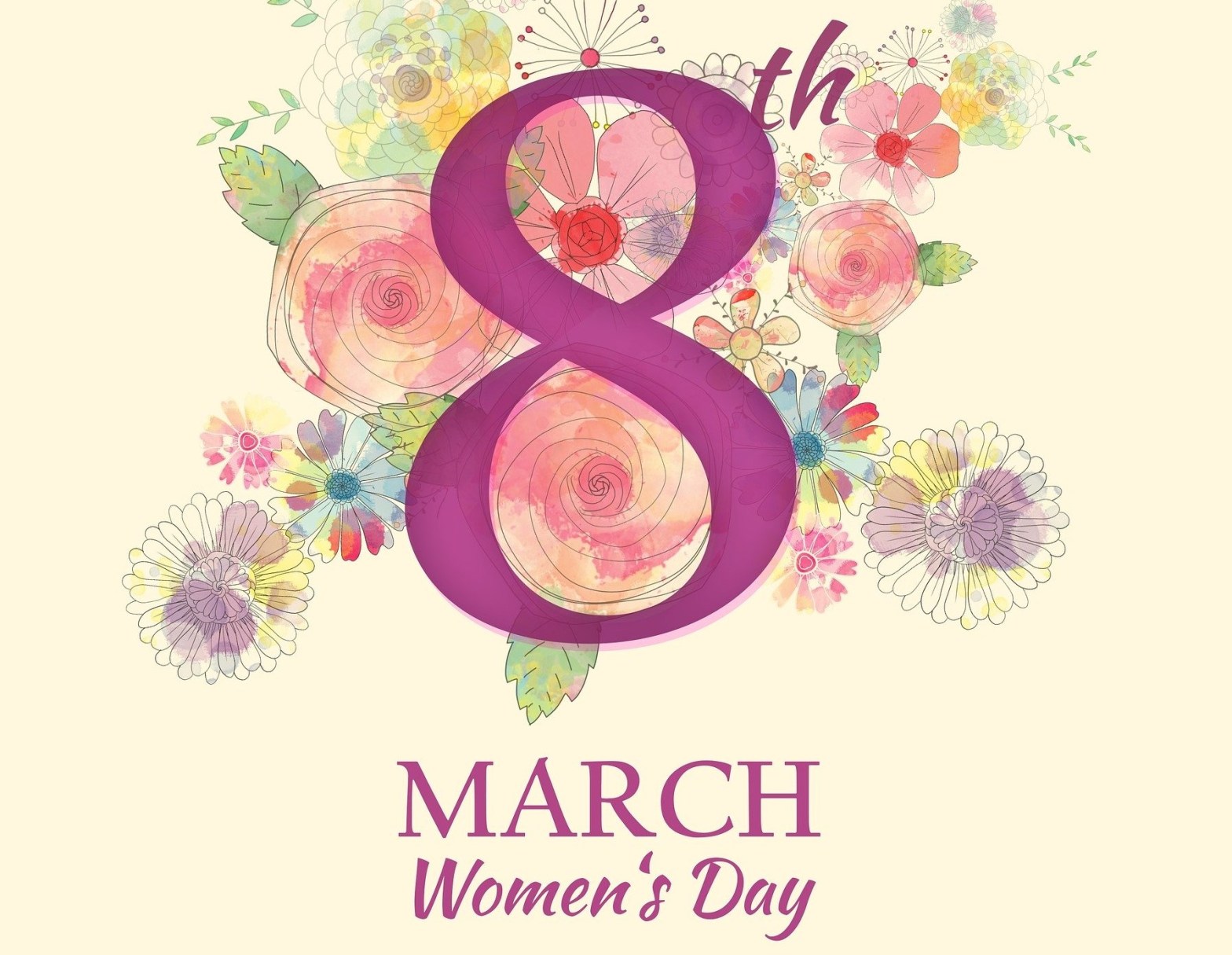
March 8 is International Women’s Day. Activities to celebrate this day began in 1911. The United Nations commemorated the day in 1978 and officially recognized it in 1980. That same year, President Jimmy Carter formally declared the nation’s first official National Women’s History Week beginning March 8, 1980: thus, explaining the choice of March 8 for International Women’s Day. With annual activities celebrating the achievements of women, the focus began to shift — highlighting issues of equality, opportunity, advancement and recognition of women vs men.

From a personal viewpoint, during the years of my childhood, little was said about women’s history, much less their rights. The sixties were dominated by the hippie movement and women across the nation began burning their bras — tsk, tsk — to recognize the celebrated masculinity and the virtual ignorance of contributions made by the feminine gender.

Inequality between men and women has existed through the ages. In the United States, the first woman known to have brought attention to this fact was Abigail Adams — wife and future First Lady to John Adams, Second President of the newly formed United States of America. On 31 March 1776, Ms Adams penned a letter to her husband and to the Continental Congress. In it, she asked that they “remember the ladies” as they worked to develop new laws suitable to the endeavors of a new nation under formation. She cautioned the men to “be more generous to the ladies than their ancestors had been.” Ms Adams went on to warn them of impending rebellion by ‘their ladies’ if the situation were not addressed because “the colonial women would not be bound by any laws not co-founded by them,” (Eds. history.com). Ms. Abigail Adams is not alone in addressing this cause. Many women in America have promoted women’s rights; some made history in so doing. Thus, from the outset, American women have run the gamut from imploring to demanding the American men remember their rights.

However, the new nation was busy with growth and development. For the most part, no one paid any attention to the women until Susan B Anthony was denied the right to speak at a temperance convention in 1841. She quickly added women’s rights to her alcohol and abolitionist endeavors. Anthony, a teacher raised in a Quaker household, was a staunch supporter of anti-slavery activity — through which she met Elizabeth Cady Stanton, The two co-founded the New York Temperance Society. Soon after, they formed the New York State Women’s Rights Committee, and Anthony served as an agent for the American Anti-Slavery Society. Joint efforts with Stanton eventually led her to head the National American Woman Suffrage Association.

In 1868, the two women began producing a weekly publication designed to promote women’s rights. The Revolution’s motto was “men their rights, and nothing more: women their rights, and nothing less,” (Eds, biography.com, 2019).

In a nation that prided itself upon freedom, justice and domestic tranquility, Susan B Anthony and Elizabeth Cady Stanton shined a bright light on the inequality of men vs women by promoting women’s right to vote. Until they set about securing the passage of Amendment 19 to the United States Constitution, little thought was given to the fact that women had been denied freedom, justice and equality by being perceived as the property of husbands, fathers and brothers. The fact that women were denied the right to vote spoke volumes to women being viewed as non-persons. Other women involved in the Suffragists push for women’s right to vote were Carrie Chapman Catt, Clara Barton, Elizabeth Smith Miller and her daughter Annie Fitzhugh Miller to name a few. The National American Woman Suffrage Association holds a Collection of documents depicting the work of these women and many others — the size of which defies imagination. First introduced in Congress in 1878, the 19th Amendment was finally approved 4 Jun 1919, and on 26 August 1920, Secretary of State Bainbridge Colby certified the 19th Amendment’s ratification.

The push for women’s rights calmed a bit following ratification of the Nineteenth Amendment. The Roaring Twenties, the Depression Era and World War II dominated the scene. During the latter, women took charge at home while men went to fight for world freedom. Jobs traditionally held by men were now filled by women. The stay at home lifestyle gave way to the country’s economic needs, the needs of servicemen overseas and the necessity of a paycheck to fund the home, food, clothing and other family needs. Some women even joined the men in the fight for freedom around the world.

With the end of World War II, the men returned to resume earning the paychecks and the women returned to the background — keeping the home fires burning — while launching a period of prosperity and the ‘baby boom.’ As the Vietnam War spawned the above-mentioned hippie movement, the focus was on ‘make love, not war’ as the desire for a return to peace flamed across the nation. Demonstrations for peace turned violent and the need for women in the workforce returned.

A burst of feminism resulted in newfound energy directed toward passage of the Equal Rights Amendment (ERA). First written by Alice Paul and Crystal Eastman, the original push for the ERA was proposed in 1923. Failing to pass Congress most every year until October 1971 when Representative Martha Griffiths introduced it once more, it finally passed the U.S. House of Representatives. It moved forward for Senate approval on 22 March 1972 and was submitted to State Congresses for ratification with a deadline of 22 March 1979. Thirty-eight states ratified the ERA, then four rescinded their state’s ratification. The legislatures extended the deadline to 30 June 1982 when, due to lack of additional ratifications, it was tabled.

In 1987, Congress declared March to be National Women’s History Month, and a special Presidential Proclamation issued every year highlights achievements of American Women. The United States, the United Kingdom and Australia have all designated March as the month for such celebrations. In Canada, Women’s History is recognized during the month of October. As efforts continue toward “Equality of Rights under a law designed to ensure that no right shall be denied or abridged by the United States — or by any State — on account of sex,” (Carter, 1980: quoted from MacGregor, 2019), the need for our message of equality at school, at work and at play continues.

~~~~~~~~~~

The image above by Marketa Machova from pixabay.com

~~~~~~~~~~

Sources:

Cohen, Sara E. (14 February 2020). 200 Years after Susan B Anthony’s Birth, Examining Her Role in the History of Women.s Voting Rights. Because of HER Story. Smithsonian. Washington D.C., USA. (2 March 2020). https://womenshistory.si.edu/news/2020/02/200-years-after-susan-b-anthony’s-birth-examining-her-role-history-women’s-voting.

Eds, biography.com, (16 July 2019), Susan B Anthony Biography: Editor, Civil Rights Activist, Publisher, Journalist (1820-1906). A&E Television Networks. (22 September 2019). https://www.biography.com/activist/susan-b-anthony.

Eds, First Ladies Biography. (2 March 2020). Abigail Adams. First Lady Biography. The National First Ladies’ Library. Canton, Ohio. (2 March 2020). http://www.firstladies.org/biographies/firstladies.aspx?biography=2.

Eds, history.com. (28 July 2018). Equal Rights Amendment passed by Congress. History. A&E Television Networks. (2 March 2020). https://www.history.com/this-day-in-history/equal-rights-amendment-passed-by-congress.

Eds, history.com. (26 February 2019). Milestones in Women’s History: A Timeline. A&E Television Networks. (22 September 2019). https://www.history.com/topics/womens-history/womens-history-us-timeline.

Eds, Wikipedia. (23 February 2020). Equal Rights Amendment. Wikipedia: The Free Encyclopedia. Wikimedia Project Powered by MediaWiki. (2 March 2020). https://en.wikipedia.org/wiki/Equal_Rights_Amendment.

Hamlin, Kimberly A. (1 March 2020). The problem with women’s history month in 2020. The Washington Post. WP Company LLC. Washington D.C., USA (2 March 2020). https://www.washingtonpost.com/outlook/2020/03/01/problem-with-womens-history-month-2020/.

MacGregor, Molly Murphy. (2019). Why March is National Women’s History Month. National Women’s History Alliance; Santa Rosa, California. (2 March 2020). https://nationalwomenshistoryalliance.org/womens-history-month/womens-history-month-history/.

Researchers, Library of Congress. (13 June 2019). 19th Amendment to the U.S. Constitution. Primary Documents in American History. The Library of Congress: Web Guides. Washington D.C., USA. (2 March 2020). https://www.loc.gov/rr//program/bib/ourdocs/19thamendment.html#top.

Willingham, AJ. (1 Mar 2020). Why Women’s History Month is in March. Represented. CNN. Atlanta, Georgia (2 March 2020). https://www.cnn.com/2020/03/01/us/womens-history-month-why-march-trnd/index.html.

Zorthian, Julia. (1 March 2018). This is How March Became Women’s History Month. Time. Time USA, LLC. (2 March 2020). https://time.com/section/us/.

~~~~~~~~~~

Study to Show Thyself . . . .

old antique bible as an open book with sunlight bursting from the pages

Scripture     with Notes:     by tkbrown

2 Timothy 2:15

(KJV)“Study to shew thyself approved unto God, a workman that needeth not to be ashamed, rightly dividing the word of truth.”

(NKJV) — “Be diligent to present yourself approved to God, a worker who does not need to be ashamed, rightly dividing the word of truth.”

I grew up hearing, reading and studying the original King James Version (KJV) of 2 Timothy 2:15. The first section of the verse was stressed and impressed upon us. Thus, we should never take another person’s word for our own salvation. Anything presented to us in sermon or Bible study should be studied in private to ensure that no false message had been presented. The salvation of our own soul depended upon it!

As I have grown older, I have come to realize, with impunity, the importance of this lesson. Switch one word — or even one comma — to another position, and the whole section can hold some meaning totally averse to that presented in the KJV. This is how conflicting doctrines have developed. I quickly came to understand my preference for intensely personal, private study to ‘search the true meaning of the scripture in question.’

If we truly search the scriptures and study them, discerning the message God is delivering and to whom, we will never have need to be ashamed for our lack of understanding and knowledge. The Apostle Paul tells us in Philippians 2:12, “Therefore, my beloved, as you have always obeyed, not as in my presence only, but now much more in my absence, work out your own salvation with fear and trembling . . . . “

In recent decades, I have paid much more attention to the latter part of the verse, ” . . . rightly dividing the word of truth.” Certain events occurred at specific times. In order to truly understand the overall message God presents in His Word, I must understand the dividing lines. I must not confuse the message given in the New Covenant (New Testament) as applying to the practices instructed in the Old Covenant (Old Testament).

~~ In another lesson, I will go more in-depth with regard to ‘rightly dividing the Word of Truth.’ For now, I present to you, Matthew 27:50, 51:

— 50 — “And Jesus cried out again with a loud voice and   yielded up the spirit.”

— 51 — “Then, behold, the veil of the temple was torn in two from top to bottom, and the earth quaked, and the rocks were split . . . . “

These two scriptures tell us precisely when the Old Covenant ended, and the New Covenant began. When Jesus, ‘yielded up the Spirit,’ — at that exact instant — ‘the veil of the temple was rent into two pieces, thus exposing the Ark of the Covenant for all to see.’ As I said above, this will be addressed more in-depth at a later date but think on this!

In closing, I present the instance when Jesus was tempted by the devil in Matthew 4:1-4:

— 1 — “Then Jesus was led up by the Spirit into the wilderness to be tempted by the devil.”

— 2 — “And when He had fasted forty days and forty nights, afterward He was hungry.”

— 3 — “Now when the tempter came to Him, he said, ‘If you are the Son of God, command that these stones become bread.'”

— 4 — “But He answered and said, ‘It is written, Man shall not live by bread alone, but by every word that proceeds from the mouth of God.’

Notes:  Thus, Jesus tells us that we must study the Word of God in order to ‘have life.’ So, search the scriptures and find, for yourself, the message sent from God to man (or woman, or child). Even parents and other loved ones can lead us astray scripturally without even realizing it. Study the Scriptures. Search the time a message is given and to whom it applied/applies. The Old Testament is still important. I helps us to understand the will of God and why it was necessary to simplify things by sending His Son, Jesus Christ, to die as compensation for our sins — not His sins — our sins.


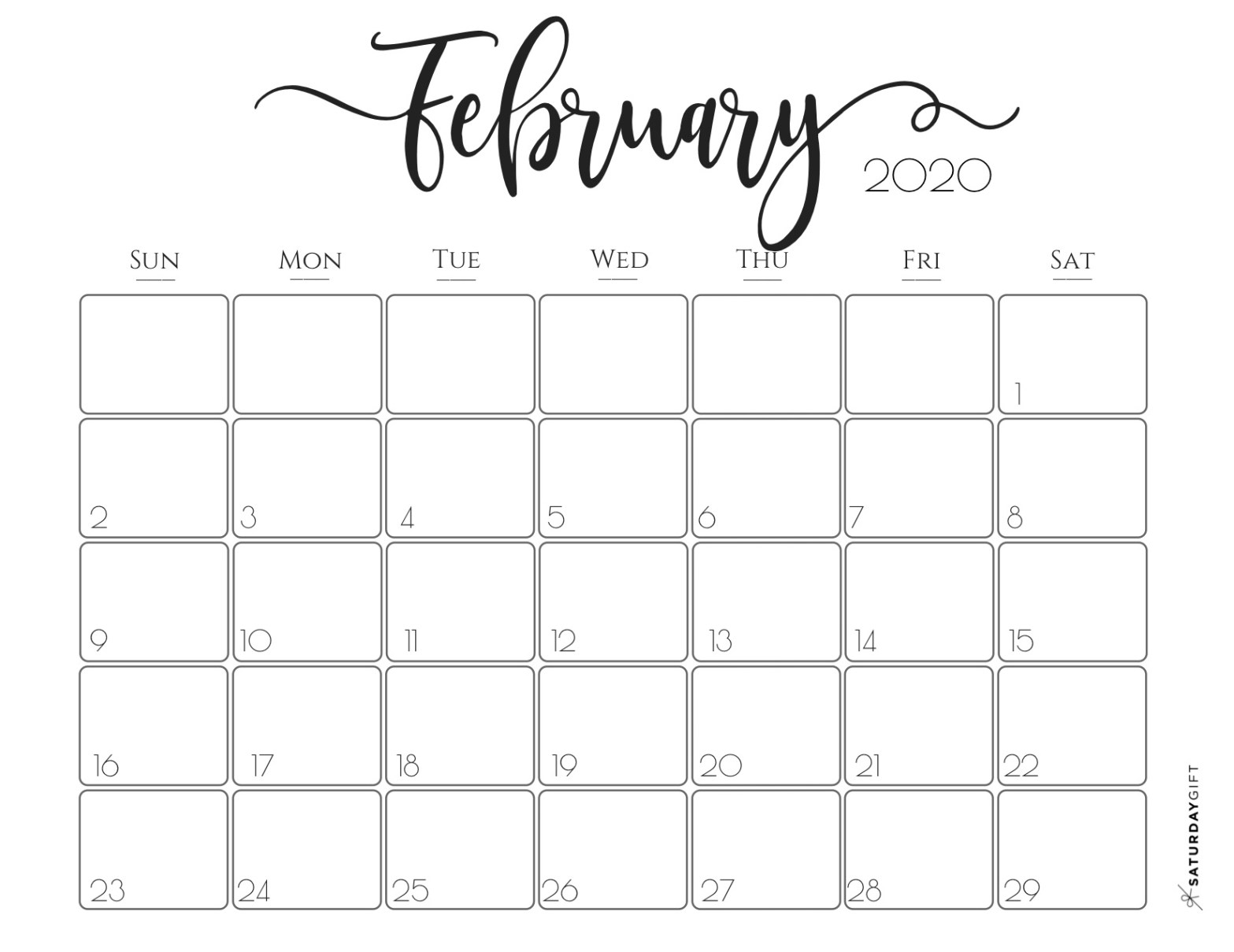
~~ 29 February 2020 ~~ Leap Day and Leap Year

by tkbrown

What is Leap Year, Leap Day? Why do we have them?

Prior to the establishment of the Julian Calendar in 45 B.C., there were no Leap Days or Leap Years. When Julius Caesar implemented the current calendar, he added ten days to the 355-day year in the Roman Calendar. He also changed the date of New Year’s Day from March 1 to January 1 and added a leap day every four years.

The Roman Calendar embraced a ten-month, 355-day year based on the lunar cycle. Each month had three phases: Kalends, or the ‘new moon’ coincided with the first of the month; Nones, defined by the first quarter-moon occurred on the fifth or seventh day of the month; Ides, the first full moon designated either the 13th or the 15th day of the month. Then, with the next Kalends, a new month began.

New Year’s Day in the Roman Calendar occurred on March 1 instead of the Julian Calendar’s January 1. The New Year’s Day Celebration, however, occurred on March 15th (during the first full moon) instead of March 1st (the actual New Year’s beginning day). The full moon probably made partying more enjoyable by increasing visibility. Celebrations included food, music and other festivities.

Then came the Gregorian Calendar with skipped days and relived days to really confuse things. First introduced in October 1582 by Pope Gregory XIII — for whom it is named. According to http://www.timeanddate.com, it is the most widely used Calendar around the world. Catholic countries adopted the calendar quickly with Spain, Portugal and Italy Leading the Group. It has been adopted by the international standard for Representation of date and times, (Hocken, 2017).

Protestant countries were leery of adopting the new calendar, fearing it to be a way of silencing the Protestant movement. Two hundred years after it was introduced, an Act of Parliament declared it to be the new Calendar for England and the (then) colonies, and the date immediately changed from September 2 to September 14, 1752, (Hocken, 2017).

Hocken on http://www.timeanddate.com quotes Benjamin Franklin, who “famously wrote about the switch in his almanac. ‘ . . . And what an indulgence is here, for those who love their pillow to lie down in Peace on the second of this month and not perhaps awake till the morning of the fourteenth.'” (Quoted by timeanddate.com from Cowan, 29; Irwin, 98).

“Orthodox countries followed the Julian calendar even longer, and their national churches have still not adopted Pope Gregory XIII’s calendar,” (Hoken, 2017).

Leap Year and Leap Day come with heaps of folk-lore attached. Leap Year, commonly known as an open opportunity for the woman to propose marriage to her love, does not encourage marriage that same year. It is supposedly unlucky for couples to marry during Leap Year.

Tell me what YOU think!

Sources:

Hocken, Vigdis. (14 November 2017). “Leap Day Customs & Traditions.” Time and Date AS. (28 February 2020). https://www.timeanddate.com/date/leap-day-february-29,html.

Hocken, Vigdis. (14 November 2017). “The Gregorian Calendar.” Time and Date AS. (28 February 2020). https://www.timeanddate.com/calendar/gregorian-calendar.html.

Calendar Quindecims March

by tkbrown
March winds arrive with blustery sunshine chill
marching through forests, over hill and dale.
Through plains lands, swamplands, farmlands and cities,
o'er countryside filled with dogs and kitties,
she makes her presence known as birds chirp songs
heralding springtime's parading entrance:
bright yellow greens in variegating dance
with blazing white dazzle in royal throngs.
Colors of the rainbow fill ground and tree
as yards, orchards, forests call to the bee --
whilst a jubilant melody exudes
from the wren, robin and goldfinch etudes.
Home garden plantings, wheat land plantings too,
fill a hustling, bustling nonchalant hue
with lists of tasks and fun yet left to do!

Image by Jill Wellington of Pixabay

Calendar Quindecims February

~~ by tkbrown
February slides into place, the chilly air takes on ice;
what was new, fun to explore -- now, not so nice.
The urge to get out and about, feel sunshine's sway
set into motion -- builds up need -- by one really nice day.
Thoughts linger on the garden a bit, the taste of fresh produce
on the tip of the tongue excites the taste buds, begins to induce
a yearning, a longing, for the freshness -- the sweetness -- of spring,
new leaves on trees, red and white flow'ring and new songs to sing.
Days yet cloudy make that fireplace hearth a nice place to stand
as we dream about sunshine, start tilling that land in our mind.
Sometimes in winter, a brief break is nice -- time to rekindle the fire,
rejuvenating those coals from that early, dark morning hour.
Starting those beans with some onion, garlic, hock of holiday ham --
making sourdough bread for some sweet butter and jam,
and the comforting savor of an enticing entre made with a yam.

Calendar Quindecims January

~~ by tkbrown

January brings in a brand new year,
gives all a blank slate, fresh start will appear.
So, if last year did not end very well --
in time, there will be a new tale to tell.
Put another log on the nesting fire,
kick back for some time with your heart's desire.
Cold days, colder nights make family
huddle inside, sipping cocoa with glee.
The morning sun seems a lot brighter now,
glistening through the ice on ev'ry tree bough.
Winter's wonderland inspires awe in view --
savor the mem'ry 'afore melted through.
Those who like the cold relish winter's beau,
missing the beauty before it moves fro --
making way for springs flowery brow.

Beginnings

Happy New Year!!! — Happy New Decade!!!

by tkbrown

The start of a New Year is traditionally a time for New Beginnings. Resolutions are made with the specific intent of changing behaviors that hinder us from being the best person we can be. The custom dates to ancient days in many countries and cultures. It is often tied to religious customs designed to acknowledge wrongdoing of the past year, seek forgiveness and determine not to repeat the forgiven offense. This year, complicating matters involving resolutions for 2020 is the beginning of a New Decade as well. Many will be setting long-term goals for the decade in both business and personal endeavors.

Resolutions are meant to strengthen our resolve in attaining specific goals. The problem is, more than half are unable to maintain the expected behavior modification. It is important to resolve changes that are small steps toward an intended goal. Keep the expected change small enough to be attainable.

Designating behavioral change above that which one is able to attain often leads to self-deprecation due to the difficulty of achieving the desired goal — so it is lost even before it is begun. If you embrace the custom of resolving change as each new year begins, be kind to yourself. Don’t expect too much. Set an attainable goal, because then you can be pleased with the progress you have made — and you can truly celebrate the end of a good year when New Years’s Day 2021 comes ’round. Above all, as some wise person once said — Live, Laugh, Love!!!

Happy New Year!!!!

Endings . . .

by tkbrown

Saying ‘Goodbye’ to days of old,
preparing for new days in view;
watching the old wind down, expire —
one last ‘Hurrah’ before the due.

Parties galore, much to be done,
friends will gather, endless blather;
dressed to the nines, bidding good will,
eating hors d’oeuvres . . . crackers a ‘slather.

Everyone gathers New Year’s Eve
to watch ‘old year out’, ‘new year in’;
knowing good times ‘of old’ are gone
and will never be seen again.

Talk of ‘those days’ enjoyed you’ll hear —
reminiscings heard all around —
until ‘Clock’ bids ‘the old’ adieu
and loudly the buzzer doth sound.

Then all will lift arms high in toast
to the brand-new year we accrue
as the chorus of Robert Burns’
‘Auld Lang Syne’ ends the ‘old year’ true.

‘Old Long Since,’ the Scottish ditty
all will sing, brings the ‘old year’s end’
while welcoming in the ‘brand new’ . . .
new beginnings and ways to mend.

Resolutions are made by all —
it seems — as they strive to start anew;
good will and intent toasts are raised . . .
promising ties will last with you.

Enjoy 'This Christmas' Now

by tkbrown

With ‘Christmases Past’
all wrapped up at last,
let us rejoice in this day
and remember to pray!

‘This Christmas’ is now;
so, why all the row
about all that was wrong
with ‘last Christmas’s song?’

The loved ones you know
love for you to show
the love in your heart;
so, give it a start!

Call someone today
just to say “Hey!”
Let them share in your ‘cheer’
throughout the New Year!

We all know ’twas sad,
those gifts that were bad,
but the past is all gone now,
bring glad tidings in tow.

What was done is all done;
I want to hear of it none!
So, when I open my door,
please, don’t be a boar!

Let’s enjoy the time we have
and ne’er need apply the salve;
create Happy Memories that will tear
when we recall again next year!

The ‘time’ that we now share
should be our only care;
’cause it is all we know,
and it may ‘ever be’ so!

Don’t waste the time we have,
or taint the current rave.
Just share your heart with me,
we’ll place New Memory on the tree!

Merry Christmas!!!!